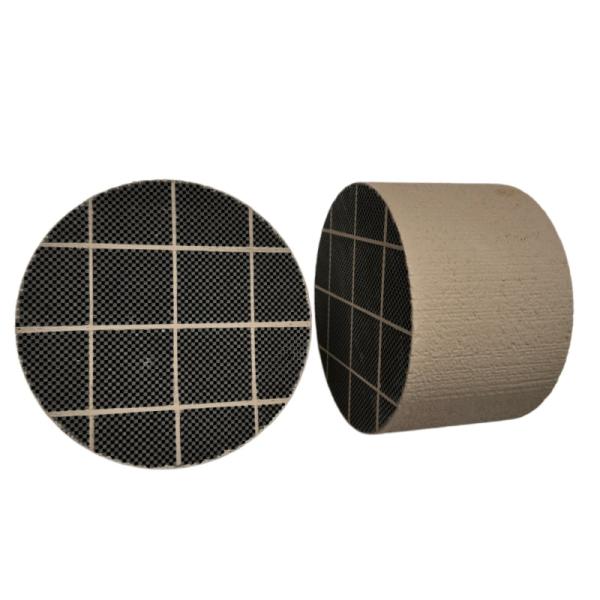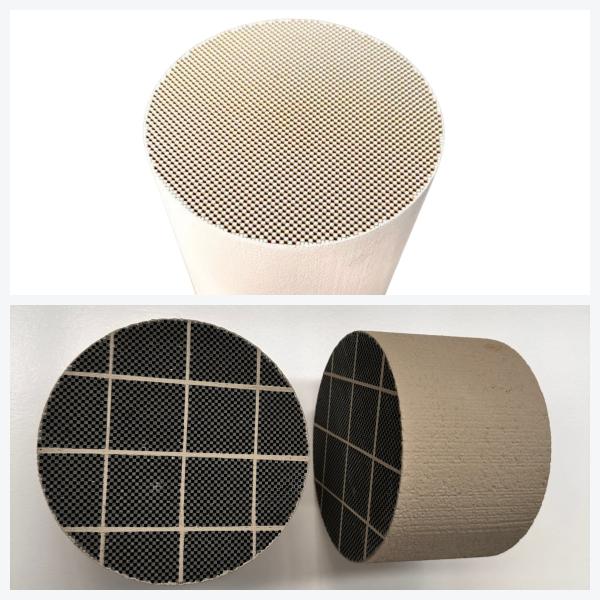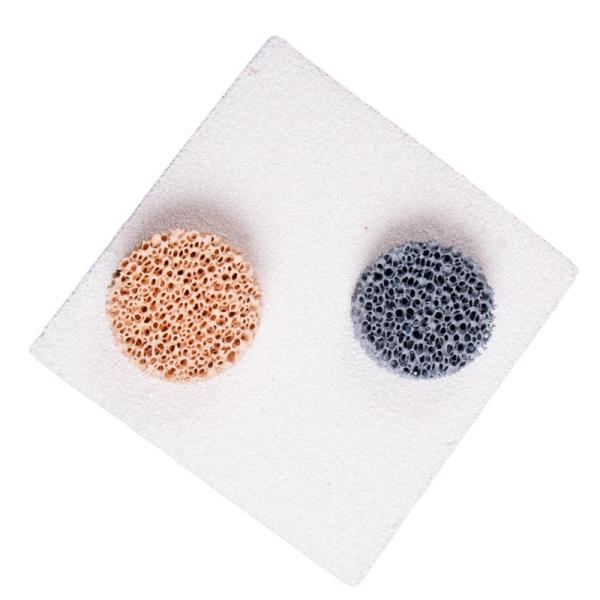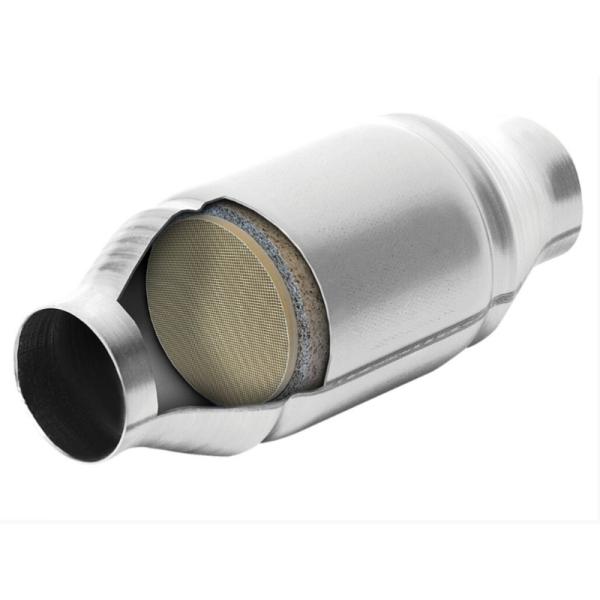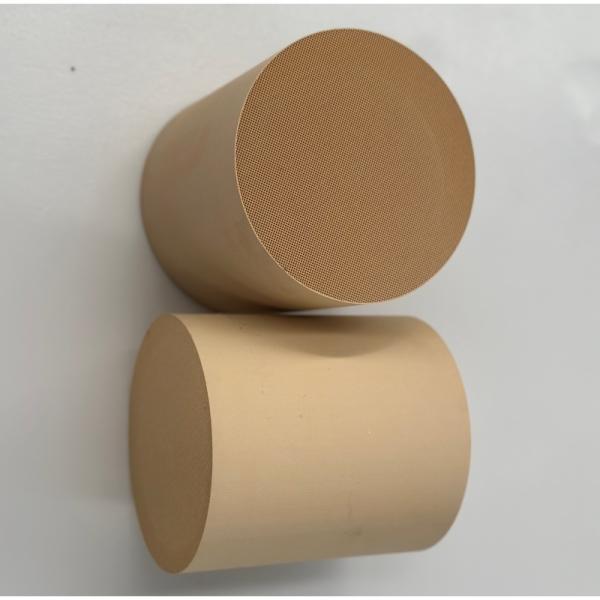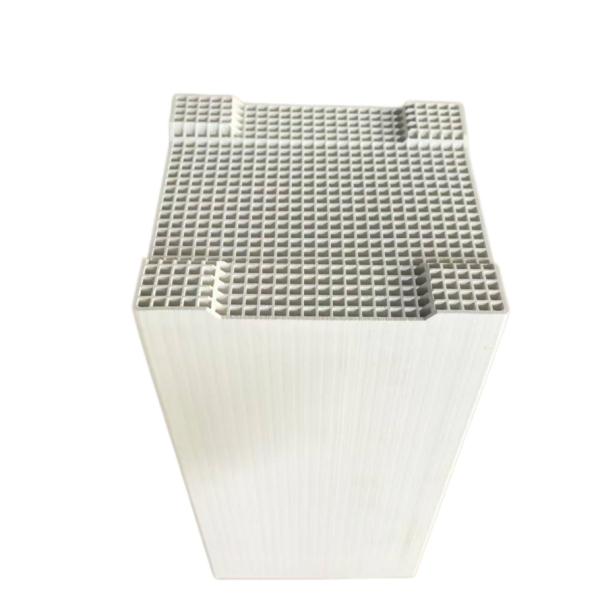



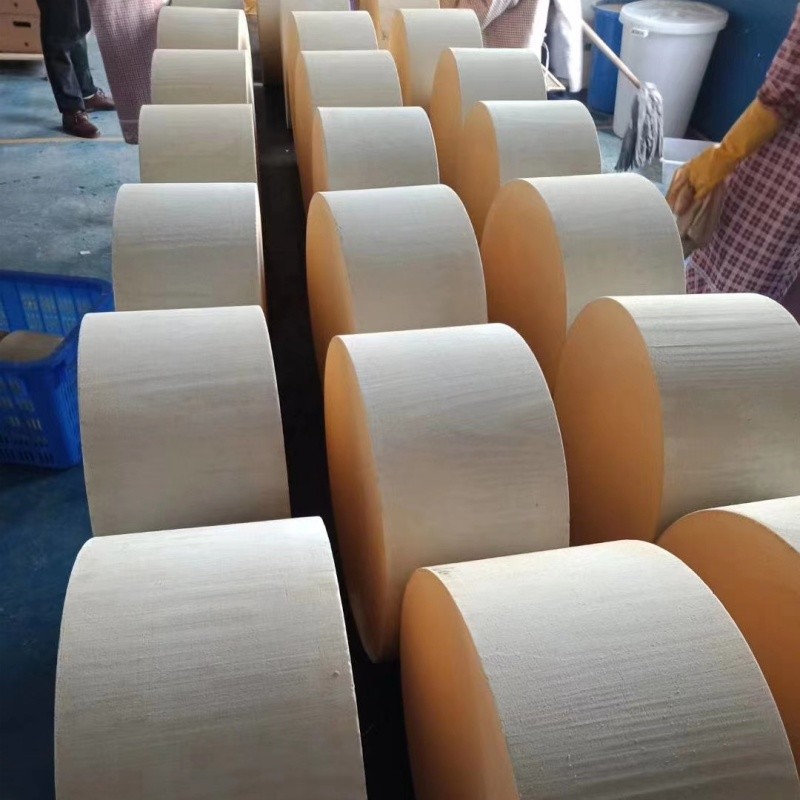
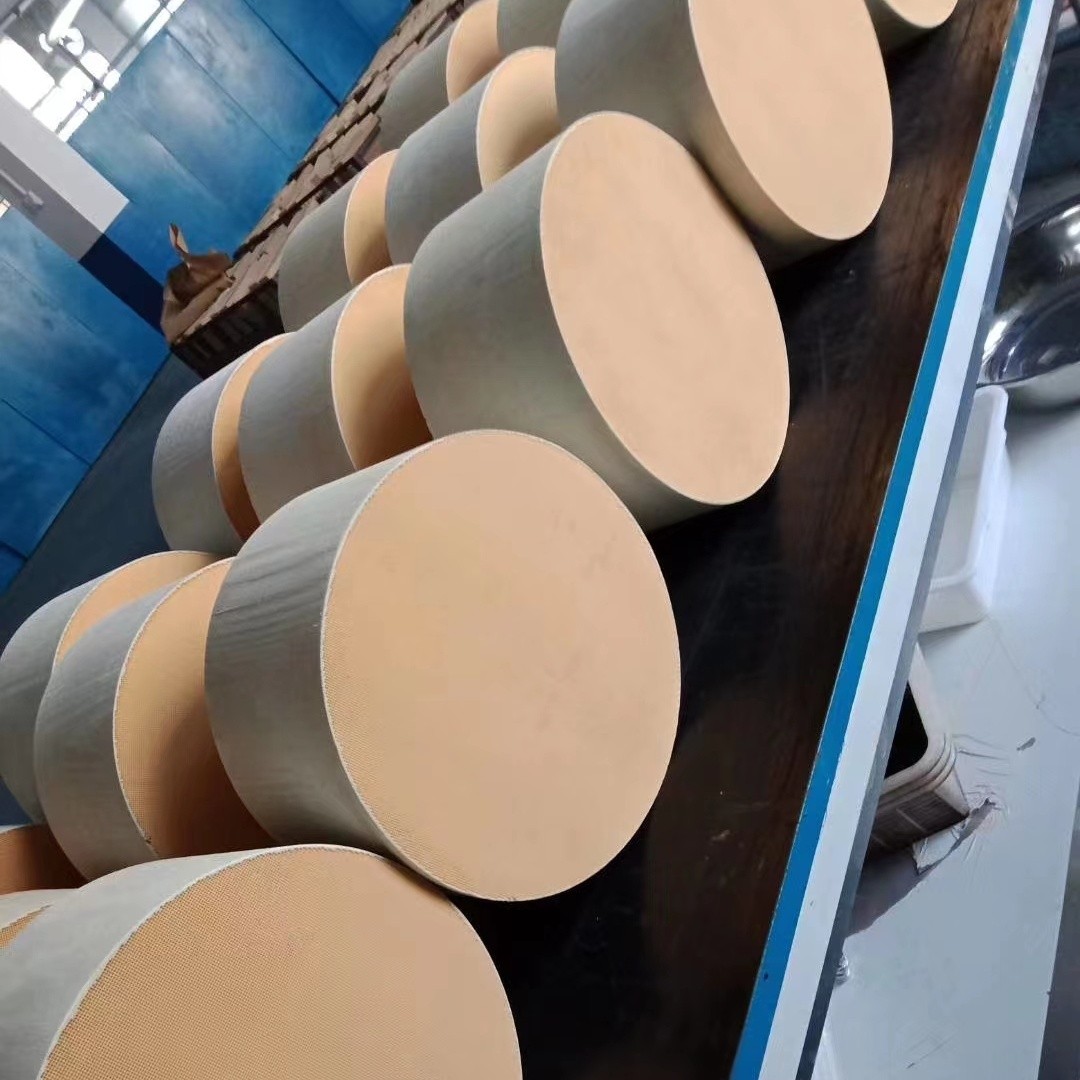
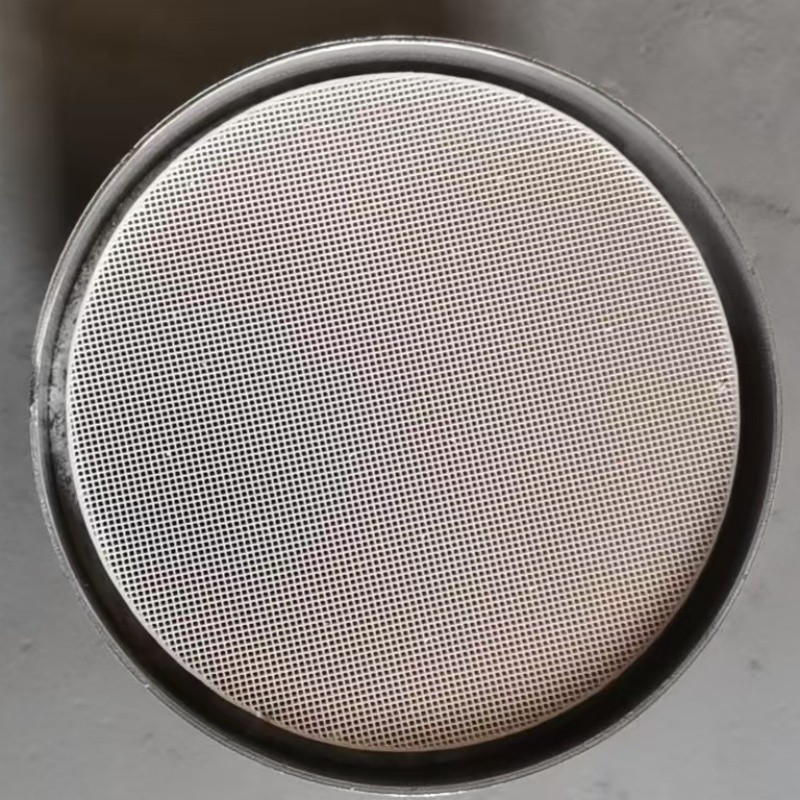

Diesel Oxidation Catalyst (DOC) Honeycomb Carrier
- Diameter Size : 93-330mm
- Length: 76~177.8mm
- Material: Cordierite Ceramic
- Application :designed to efficiently purify harmful pollutants in exhaust gas and meet global strict emission standards
- Specification
- FAQs
Diesel Oxidation Catalyst (DOC) Honeycomb Carrier
Product Introduction
The Diesel Oxidation Catalyst (DOC) Honeycomb Carrier is the core component of the diesel engine exhaust after-treatment system, designed to efficiently purify harmful pollutants in exhaust gas and meet global strict emission standards. It serves as a stable substrate for precious metal catalysts (Pt/Pd), ensuring rapid activation and long-term reliable operation in harsh diesel exhaust environments.
Core Material & Structural Advantages
The main material of our DOC honeycomb carrier is cordierite (chemical formula: 2MgO·2Al₂O₃·5SiO₂), which features excellent thermal shock resistance with a low thermal expansion coefficient (≈1.0×10⁻⁶/℃). It can withstand continuous high temperatures of 800-1000℃ and short-term high temperatures of up to 1200℃, along with high mechanical strength, acid and alkali resistance, and cost-effectiveness, making it the preferred choice for mainstream diesel exhaust applications. The chemical formula of cordierite is stable at high temperatures, ensuring no decomposition or structural damage during the exhaust purification process.
For scenarios requiring rapid cold-start ignition, we also offer optional metal carriers (Fe-Cr-Al alloy), which have faster thermal conductivity and quicker light-off performance, adapting to high-frequency cold-start working conditions.
Key Specifications
• Cell Density (CPSI): 300/400/600 CPSI (mainstream specifications), 100-600 CPSI customizable; 400/4 and 600/3 thin-wall models are recommended for National VI/Euro VI emission standards.
• Wall Thickness: 0.16-0.5 mm, thin-wall design effectively reduces back pressure and improves exhaust flow efficiency.
• Open Area Ratio: 60%-70%, with a large specific surface area (100-200 m²/L) to ensure sufficient catalyst loading and reaction efficiency.
• Dimensions & Shape: Circular is the mainstream shape, with oval, racetrack and custom special shapes available. Routine dimensions are shown in the following table:
|
Shape Type |
Key Dimensions |
Common Specifications |
|
Circular (Mainstream) |
Diameter (Φ): 76mm-330.2mm; Length (H): 30mm-203.2mm |
Φ76×50mm, Φ101.6×100mm, Φ101.6×152.4mm, Φ127×152mm, Φ150×100mm, Φ266.7×203.2mm |
|
Oval |
Long Axis × Short Axis × Length |
112×80×(30-152.4)mm, 120.65×80.01×(30-152.4)mm |
|
Racetrack |
Special oval-like structure |
Φ101.6×100mm (racetrack type), 146.8×77×86.4mm, 120.6×80×152.4mm |
• Note: All routine dimensions are compatible with 300/400/600 CPSI (mainstream cell density) and meet Euro 4/5/6, National III-VI emission standards.
Core Functions & Performance
After coating with precious metal catalysts (Pt/Pd), the DOC honeycomb carrier achieves the following core functions, among which the purification reaction is realized through specific chemical reactions:
1.Pollutant Oxidation: Efficiently oxidizes CO to CO₂, HC to CO₂ and H₂O, and SOF (Soluble Organic Fraction) to CO₂ and H₂O. The key chemical reaction formulas for purification are clearly listed below, which are the core principles of the DOC honeycomb carrier's pollutant purification function:
1. Carbon Monoxide (CO) Purification Reaction: 2CO + O₂ → 2CO₂ (Under the catalysis of Pt/Pd, carbon monoxide is completely oxidized into non-toxic carbon dioxide)
2. Hydrocarbon (HC) Purification Reaction (taking propane, a typical HC component in diesel exhaust, as an example): C₃H₈ + 5O₂ → 3CO₂ + 4H₂O (Hydrocarbons are oxidized into harmless carbon dioxide and water)
3. Soluble Organic Fraction (SOF) Purification Reaction: CₙHₘ + (n + m/4)O₂ → nCO₂ + (m/2)H₂O (SOF, the soluble organic component in particulate matter, is fully oxidized to achieve purification)
The purification efficiency reaches ≥90% for CO, ≥80% for HC, and 20%-40% for PM reduction.
4.Temperature Control Assistance: The exothermic oxidation reaction raises the exhaust gas temperature to 250-400℃, providing necessary temperature conditions for DPF regeneration and SCR efficient reaction.
5.Structural Support: The honeycomb structure provides a stable attachment surface for catalysts, with strong vibration resistance and high-temperature aging resistance, extending the service life of the entire after-treatment system to more than 80,000 kilometers.
Product Size :
|
Product Size |
|||||||
|
No. |
Specification (D×L) (in.×in.) |
Cell Density (cpsi) |
Diameter (in.) |
Height (in.) |
Diameter (mm) |
Height (mm) |
Volume (L/pc) |
|
1 |
5.66×3 |
600 |
5.66 |
3 |
143.8 |
76.2 |
1.236 |
|
2 |
5.66×4 |
600 |
5.66 |
4 |
143.8 |
101.6 |
1.648 |
|
3 |
5.66×5 |
600 |
5.66 |
5 |
143.8 |
127 |
2.061 |
|
4 |
5.66×6 |
600 |
5.66 |
6 |
143.8 |
152.4 |
2.473 |
|
5 |
6.77×3 |
600 |
6.77 |
3 |
172 |
76.2 |
1.769 |
|
6 |
6.77×4 |
600 |
6.77 |
4 |
172 |
101.6 |
2.358 |
|
7 |
6.77×5 |
600 |
6.77 |
5 |
172 |
127 |
2.948 |
|
8 |
6.77×6 |
600 |
6.77 |
6 |
172 |
152.4 |
3.538 |
|
9 |
7.5×3 |
600 |
7.5 |
3 |
190.5 |
76.2 |
2.171 |
|
10 |
7.5×4 |
600 |
7.5 |
4 |
190.5 |
101.6 |
2.894 |
|
11 |
7.5×6 |
600 |
7.5 |
6 |
190.5 |
152.4 |
4.342 |
|
12 |
7.5×7.5 |
600 |
7.5 |
7.5 |
190.5 |
190.5 |
5.427 |
|
13 |
9×6 |
600 |
9 |
6 |
228.6 |
152.4 |
6.252 |
|
14 |
9.5×4 |
600 |
9.5 |
4 |
241.3 |
101.6 |
4.644 |
|
15 |
9.5×4.5 |
600 |
9.5 |
4.5 |
241.3 |
114.3 |
5.224 |
|
16 |
9.5×5 |
600 |
9.5 |
5 |
241.3 |
127 |
5.805 |
|
17 |
9.5×6 |
600 |
9.5 |
6 |
241.3 |
152.4 |
6.966 |
|
18 |
9×7.5 |
600 |
9 |
7.5 |
228.6 |
190.5 |
7.815 |
|
19 |
10.5×4 |
600 |
10.5 |
4 |
266.7 |
101.6 |
5.673 |
|
20 |
10.5×4.5 |
600 |
10.5 |
4.5 |
266.7 |
114.3 |
6.382 |
|
21 |
10.5×5 |
600 |
10.5 |
5 |
266.7 |
127 |
7.091 |
|
22 |
10.5×6 |
600 |
10.5 |
6 |
266.7 |
152.4 |
8.509 |
|
23 |
10.5×7 |
600 |
10.5 |
7 |
266.7 |
177.8 |
9.928 |
|
24 |
11.25×4 |
600 |
11.25 |
4 |
285.8 |
101.6 |
6.515 |
|
25 |
11.25×4.5 |
600 |
11.25 |
4.5 |
285.8 |
114.3 |
7.329 |
|
26 |
11.25×5 |
600 |
11.25 |
5 |
285.8 |
127 |
8.143 |
|
27 |
11.25×6 |
600 |
11.25 |
6 |
285.8 |
152.4 |
9.772 |
|
28 |
11.25×7 |
600 |
11.25 |
7 |
285.8 |
177.8 |
11.401 |
|
29 |
12×4 |
600 |
12 |
4 |
304.8 |
101.6 |
7.41 |
|
30 |
12×4.5 |
600 |
12 |
4.5 |
304.8 |
114.3 |
8.336 |
|
31 |
12×5 |
600 |
12 |
5 |
304.8 |
127 |
9.262 |
|
32 |
12×6 |
600 |
12 |
6 |
304.8 |
152.4 |
11.114 |
|
33 |
12×7 |
600 |
12 |
7 |
304.8 |
177.8 |
12.967 |
|
34 |
13×4 |
600 |
13 |
4 |
330.2 |
101.6 |
8.696 |
|
35 |
13×4.5 |
600 |
|||||
FAQS – Diesel Oxidation Catalyst (DOC) Honeycomb Carrier
Q1: What material is used for DOC honeycomb carrier?
Our DOC honeycomb carrier is mainly made of high-quality cordierite. Cordierite features ultra-low thermal expansion coefficient, excellent thermal shock resistance and stable mechanical strength, which is ideal for diesel exhaust aftertreatment systems. Metallic substrate is also available as an alternative upon request.
Q2: What is the function of DOC honeycomb carrier?
The honeycomb carrier acts as the substrate to support the precious metal coating (Pt/Pd). Its dense parallel channels provide large specific surface area for catalytic reactions. After coating, the finished DOC can oxidize CO, HC and soluble organic fractions (SOF), and generate NO₂ to assist DPF passive regeneration.
Q3: What cell densities do you supply for DOC honeycomb carriers? And how to select?
Common cell densities include 200/300/400 CPSI. 300 CPSI and 400 CPSI are widely adopted for Euro V / Euro VI diesel applications. Higher CPSI brings larger surface area for better catalytic performance, but higher backpressure. Lower CPSI offers lower exhaust pressure drop and stronger anti-clogging performance. Selection depends on engine displacement, exhaust flow rate and emission regulation requirements.
Q4: What are the available shapes and dimensions?
Round is the mainstream shape for automotive DOC carriers. Oval and customized elliptical shapes are also supported. We can produce diameters from Φ80 mm up to Φ300 mm, lengths customizable. All dimensions can be tailored to match your canning design.
Q5: What is the maximum continuous operating temperature?
The cordierite DOC carrier can withstand continuous working temperature up to 1200°C. Short-term peak temperature can reach 1250°C. Please avoid sharp thermal shock to prevent substrate cracking.
Q6: What quality tests are performed for each batch?
Each batch will be inspected for dimensional tolerance, appearance check (no cracks, chipping, blocked channels), thermal expansion coefficient, crushing strength and water absorption. Mill Test Certificate (MTC) will be provided for each shipment. Third-party inspection is acceptable.
Q7: Can you customize wall thickness and geometric parameters?
Yes. We can adjust cell wall thickness according to your requirement, balancing strength and backpressure. Customized cell structure, chamfer and end face processing are available. Please share your drawing or technical specification.
Q8: What is your MOQ and lead time?
Standard round cordierite DOC carrier MOQ is 1 pallet. Sample order is available for coating test. Lead time for standard items is 18–28 days after deposit receipt. Customized sizes will need extra production time.
Q9: How to pack the DOC honeycomb carriers for export?
Each carrier is wrapped with protective foam, separated by cushion pads, then packed into fumigated wooden crates. Export packing can prevent collision and breakage during sea/air transport. Custom packaging solution is acceptable.
Q10: Do you provide technical support?
Yes. Our engineering team can support you on substrate selection, canning proposal, thermal expansion matching and coating recommendation. We can assist in performance verification for your aftertreatment system.