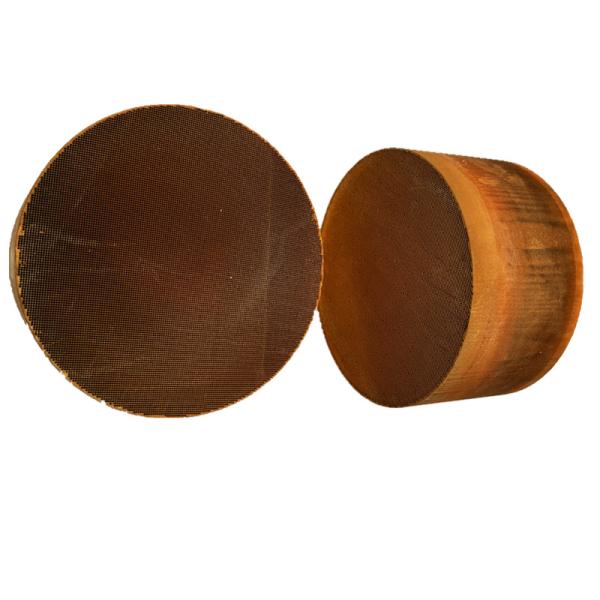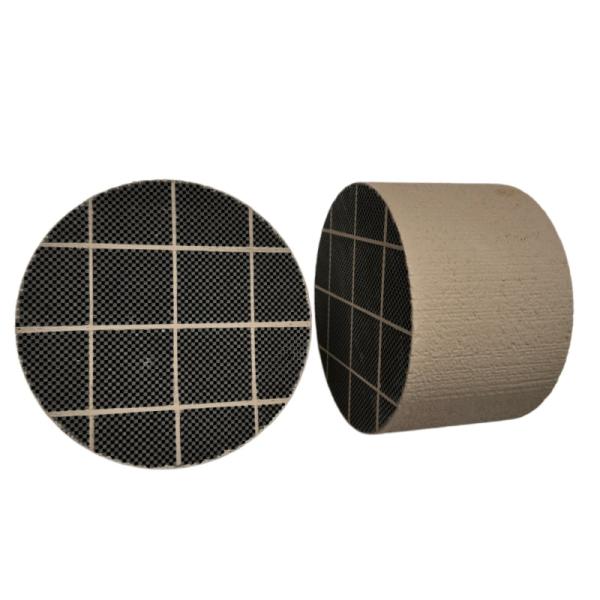



High-quality Ceramic Foam Filter for molten metal filtration
- Size : 30~200mm Customized size
- Heigh:10~25mm
- Material: Silicon carbide ,Alumina and Zirconia
- Application : For filtration of Molten Metal
- Specification
- FAQs
Monthly output of filters is 3 million pieces
Over 20 years of ceramic foam filters' experience Physical/thermal properties tested and certified with SGS
Company quality system conform ISO9001:2015
Product Description
Ceramic foam filters have revolutionized the metal casting industry, offering a highly effective and efficient solution for filtering molten metal. These filters are made from a unique ceramic material that offers exceptional porosity and strength, making them ideal for use in a wide range of metal casting applications.
The primary function of a ceramic foam filter is to remove impurities and inclusions from molten metal before it is poured into a mold. These impurities, such as oxides, slag, and gas bubbles, can cause defects and porosity in the final casting, affecting its mechanical properties and durability. By filtering out these contaminants, ceramic foam filters ensure that the resulting casting is cleaner and stronger.
Product Paramenters
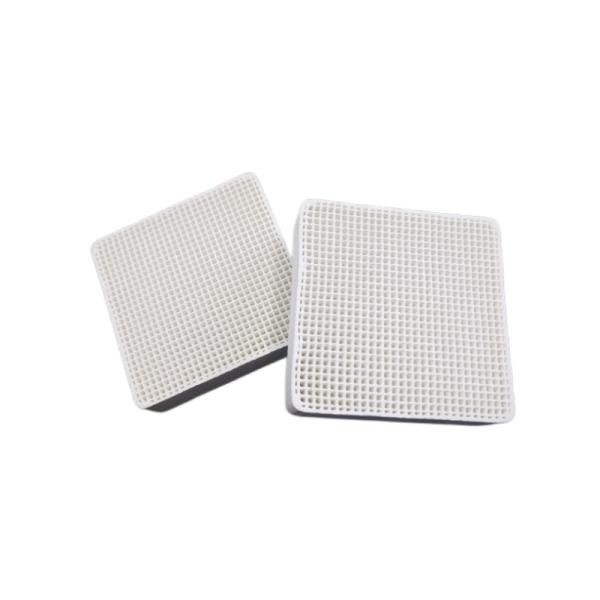
Zirconia ceramic foam filter
* Color: Yellow
* PPI:10ppi, 20ppi, 30ppi, 40ppi, 50ppi 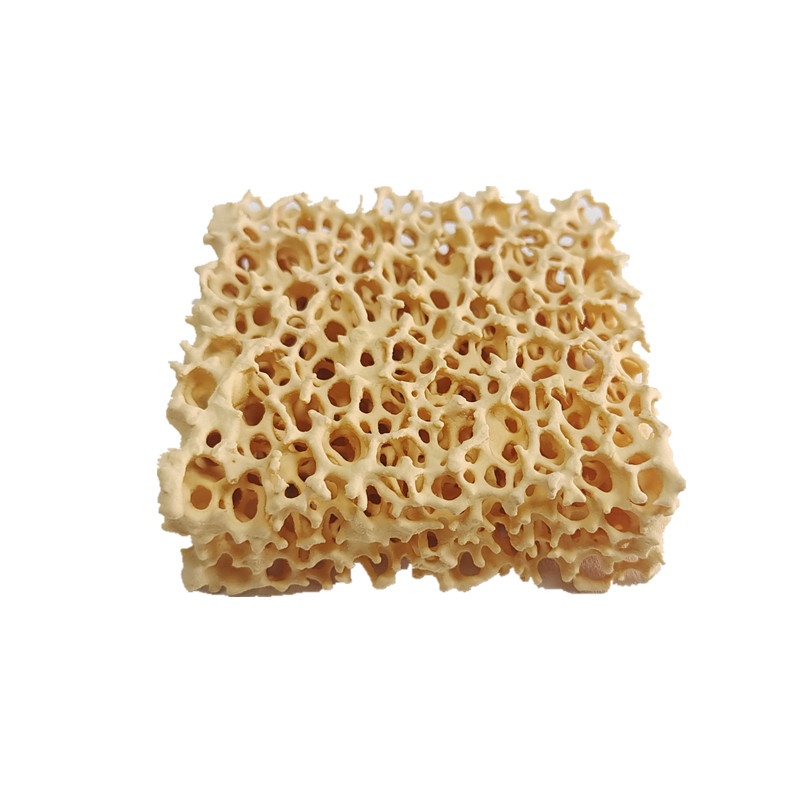
* Working Temperature:≤1700℃
* Thermal shock resistance(1100℃):≥2
* Compressive strength:>1.2Mpa
* Porosity: ≥80%
* Sample: Support
* Customization: Sizes and shapes
* Application:High melting point metal alloys like Steel, Alloy Steel, and Stainless Steel
Alumina ceramic foam filter 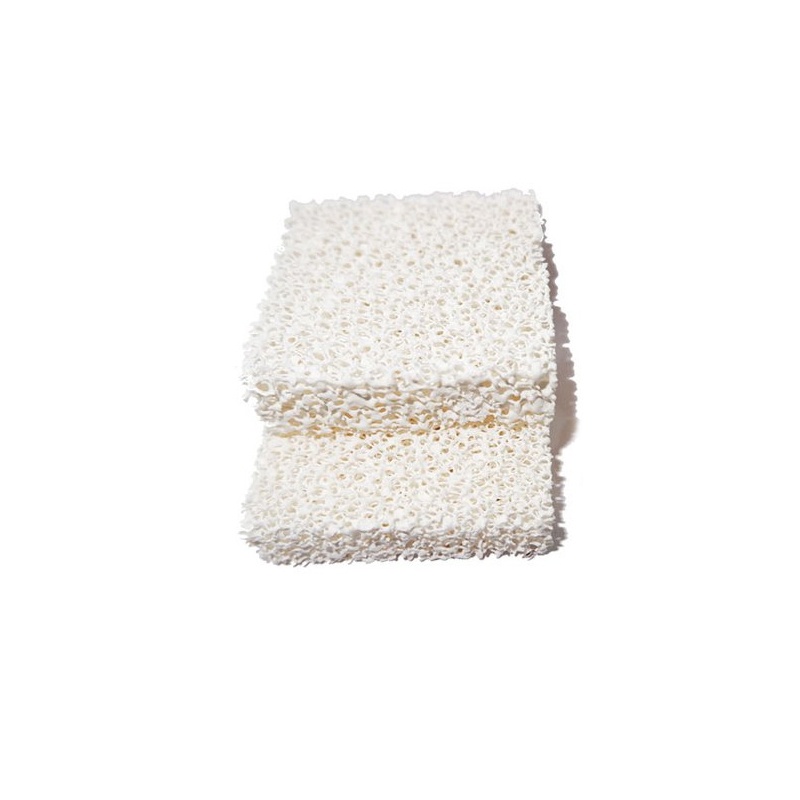
* Color: White
* PPI: 10ppi, 20ppi, 30ppi, 40ppi, 50ppi
* Working Temperature:≤1100℃
* Thermal shock resistance(1100℃):≥2
* Compressive strength:>0.8Mpa
* Porosity: ≥80%
* Sample: Support
* Customization: Sizes and shapes
* Application:Aluminium Aluminium alloys and other Non-ferrous alloys.
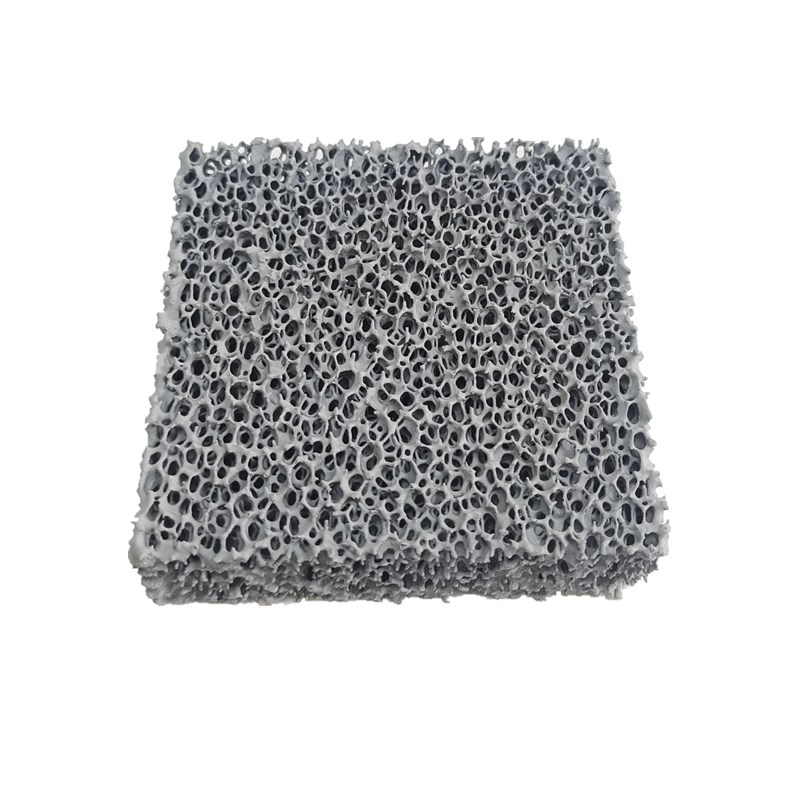
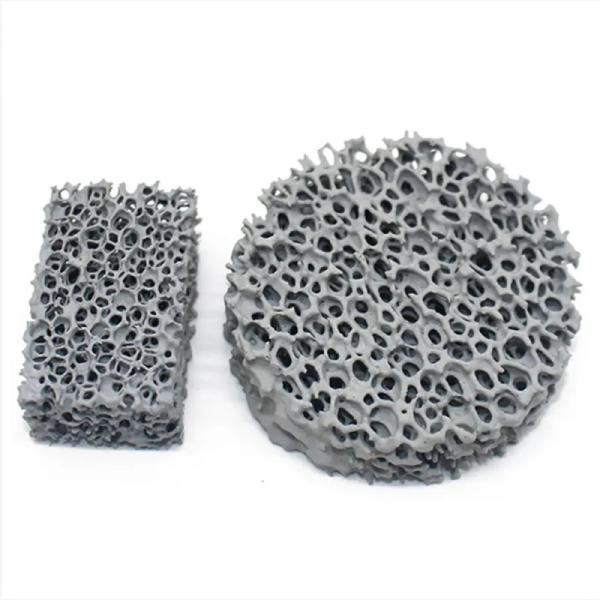
Silicon carbide ceramic foam filter (SIC ceramic foam filter)
* Color: Dark Grey
* PPI: 10ppi, 20ppi, 30ppi, 40ppi, 50ppi
* Working Temperature: ≤1500℃
* Thermal shock resistance(1100℃):≥2
* Compressive strength:>0.9Mpa
* Porosity: ≥80%
* Sample: Support
* Customization: Sizes and shapes
* Application:Ductile Cast Iron, Malleable Cast Iron, Gray iron, and other Cast Iron.
Product Size
|
Dimensions mm |
Flow rate(kg/s) |
Total capacity |
|
|
Carbon steel |
High-alloy steel |
kg |
|
|
40×40×20 |
2 |
2.5 |
30 |
|
50×50×22 |
3 |
4 |
50 |
|
55×55×22 |
4 |
5 |
60 |
|
Φ50×22 |
2.5 |
3 |
40 |
|
Φ60×25 |
3.5 |
4.5 |
70 |
|
Φ70×25 |
4.5 |
6 |
95 |
|
Φ75×25 |
5 |
6.5 |
110 |
|
Φ80×25 |
6 |
7.5 |
125 |
|
Φ90×25 |
8 |
9.5 |
160 |
|
Φ100×25 |
9.5 |
12 |
190 |
|
Φ120×25 |
11 |
14 |
220 |
|
Φ150×30 |
12.5 |
15 |
330 |
Note:
* Common sizes range: 40x40x20 mm up to 150x150x30 mm.
* Round filters are available from D40x20 mm up to D150x30 mm.
* Although PPI 10 is the porosity most commonly used for steel casting, finer porosities up to PPI 40 are available on request.
* Custom-made cut-to-size filters are also possible.
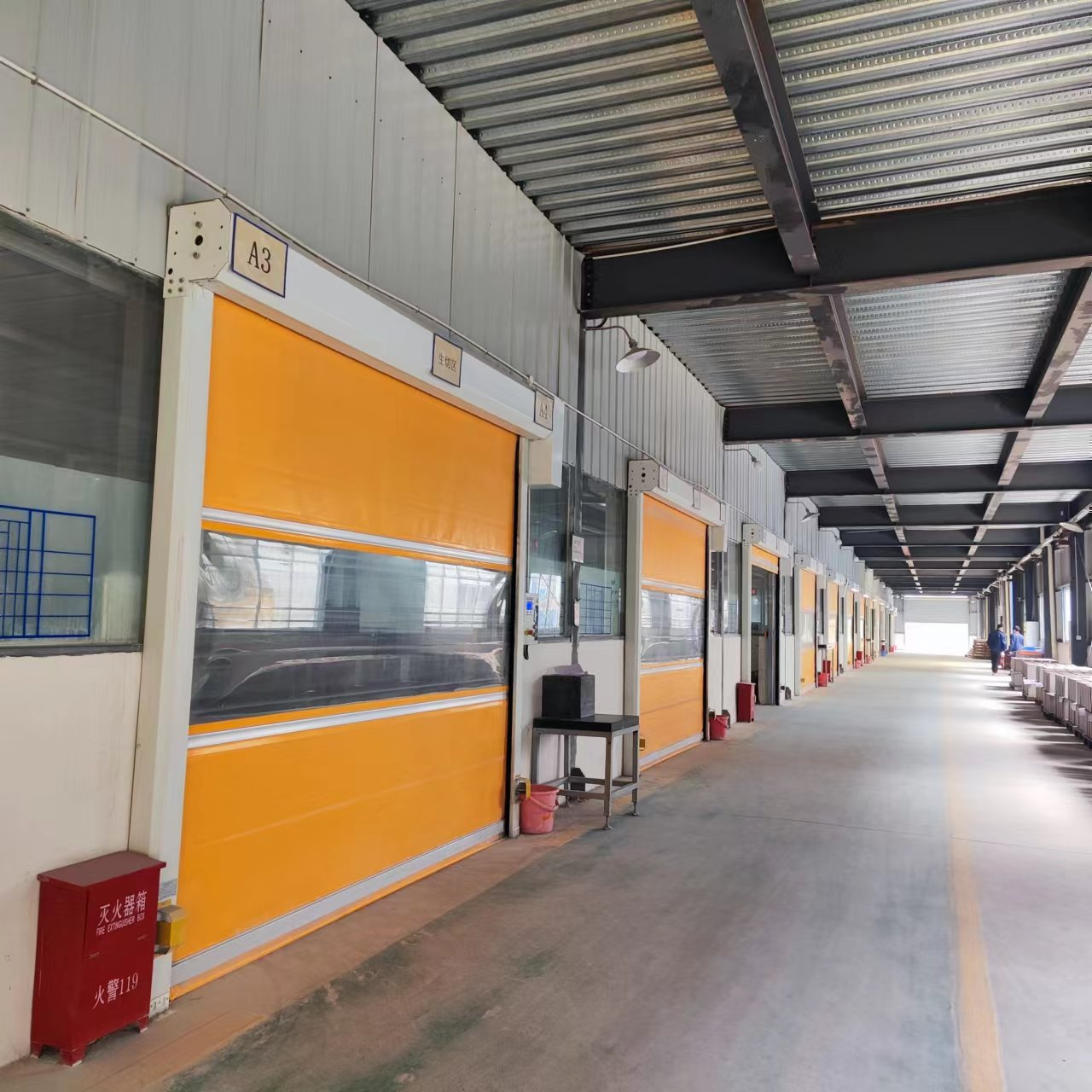
TaiyuanSIMIS Company was established in 2004 and has since expanded its business scope from Investment Casting to encompass the entire casting industry, including Sand Casting, Die Casting, and Forging Products.
In 2023, the company ventured into Refractories and Ceramic Foam Filters products closely associated with the casting industry.
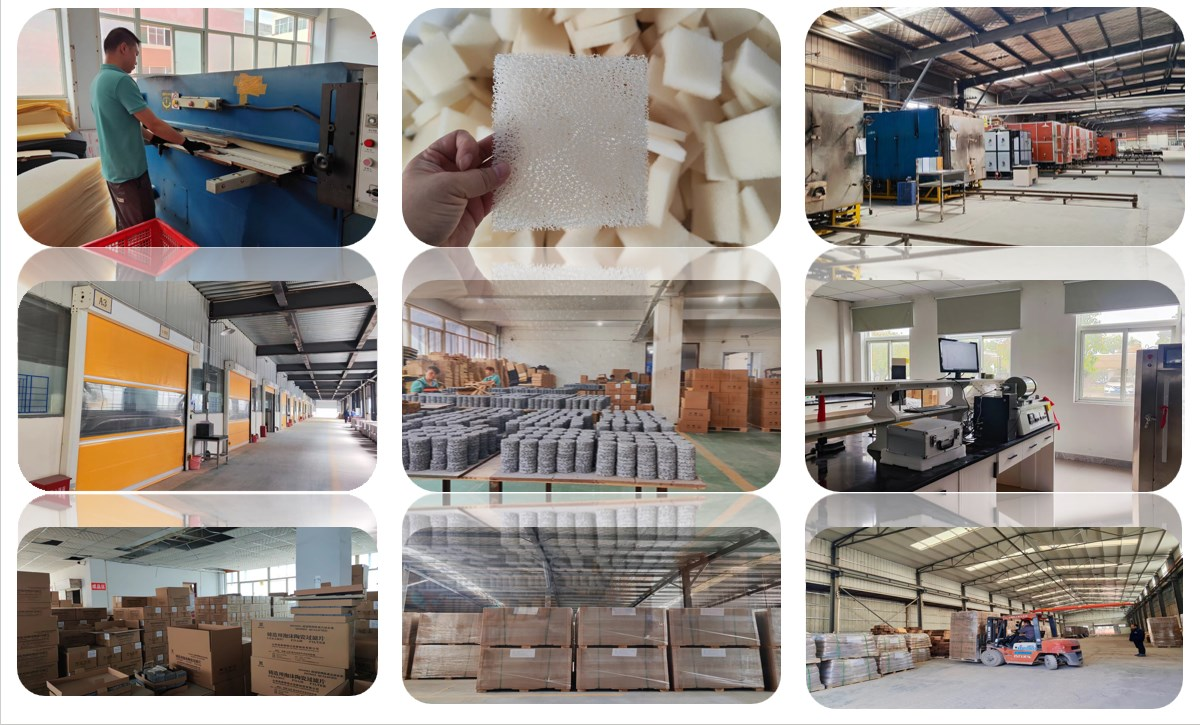
Our workshop
FAQ: High-Quality Ceramic Foam Filter for Molten Metal Filtration
Q1. What is a ceramic foam filter and what does it do?
A ceramic foam filter is a porous ceramic material with a 3D open-cell network structure (porosity: 80–90%). When molten metal flows through it, the filter removes non-metallic inclusions, oxides, and slag via interception, adsorption, and deep-bed filtration. This purifies the melt, improves casting structure, reduces gas content, and enhances mechanical properties and surface quality, ultimately increasing the yield rate.
Q2. How do I choose the right filter material for my casting process?
The key is matching the filter's maximum working temperature and chemical stability to your molten metal. Common materials include:
| Material | Main Component | Max Temp. | Typical Application |
|---|---|---|---|
| Alumina | Al₂O₃ ≥ 85% | ≤ 1100°C | Aluminum & aluminum alloys, non-ferrous metals |
| Silicon Carbide | SiC ≥ 60% | ≤ 1500–1550°C | Gray iron, ductile iron, malleable iron |
| Zirconia | ZrO₂ ≥ 95% | ≤ 1700°C | Steel, alloy steel, stainless steel |
| Magnesia | MgO | ≤ 1000°C | Magnesium & highly reactive alloys |
⚠️ Using the wrong material may cause softening, cracking, or chemical reactions that contaminate the casting.
Q3. What is PPI and how do I choose the right pore density?
PPI (Pores Per Inch) indicates pore size – higher PPI means finer filtration but greater flow resistance.
- General aluminum: 30 PPI is sufficient.
- High-quality requirements: Use 40–50 PPI.
- Dirty melt: Pre-filter with 20 PPI to prevent clogging.
- Iron castings: Ductile iron often uses 10 PPI; gray/malleable iron uses 10–20 PPI.
Q4. What are the key technical specifications?
Key performance indicators include:
- Porosity: 80–90% for good permeability
- Mechanical strength (cold & hot): Prevents breakage during handling and pouring
- Refractoriness: Withstands high working temperatures without softening
- Thermal shock resistance: Survives rapid temperature changes (e.g., ≥ 6 cycles from 1100°C to room temperature)
- Chemical stability: No reaction with the molten metal
Q5. How should I install and use the filter correctly?
- Orientation: Place horizontally in the filter box, with metal flowing vertically downward (bottom-gating). This minimizes turbulence and bypass.
- Sealing: Use refractory fiber to tightly seal the gap between the filter and the box – un-filtered metal must not bypass.
- Preheating: Preheat the filter close to the melt temperature using radiant heaters or a gas torch to prevent premature solidification and clogging.
Q6. What sizes are available, and what is the lead time?
- Sizes: Common shapes are square (30–600 mm) and round (φ40–φ300 mm), with thickness of 10–50 mm. Custom sizes are available.
- Lead time: Typically 15–20 days after PO receipt; samples may take 7–10 working days.
Q7. How can I ensure I'm buying high-quality products?
Look for:
- QC system with full traceability from raw materials to finished goods, including chemical/physical test reports.
- Compliance with relevant standards (e.g., Chinese GB, ANSI, BS, DIN).
- A manufacturer (not just a trader) – they usually offer better cost control and technical support.