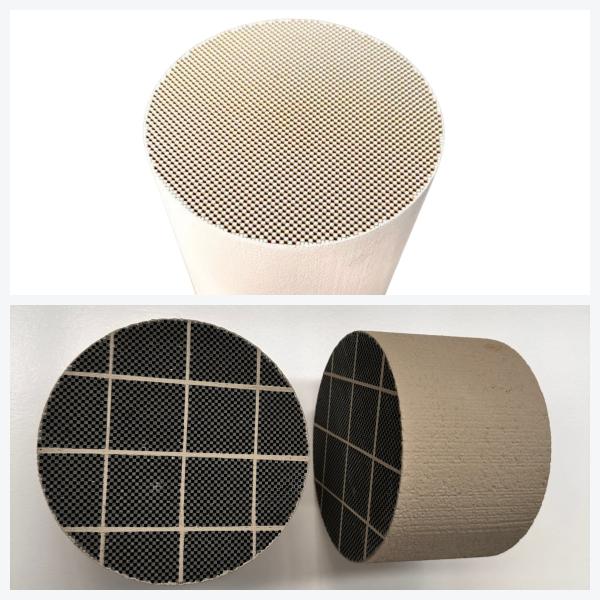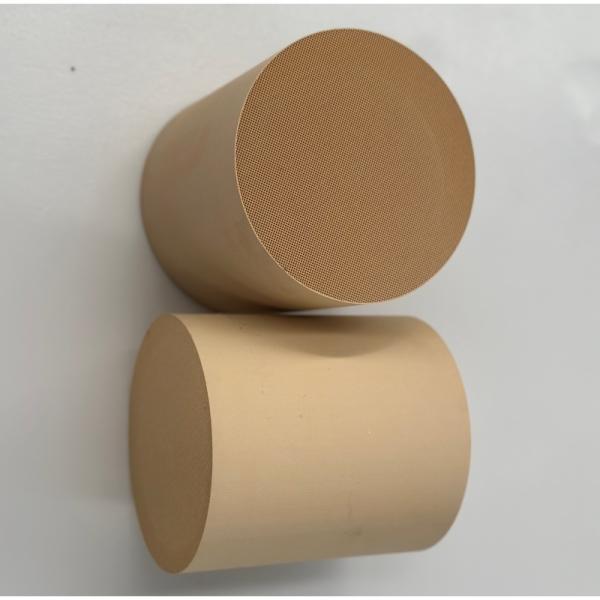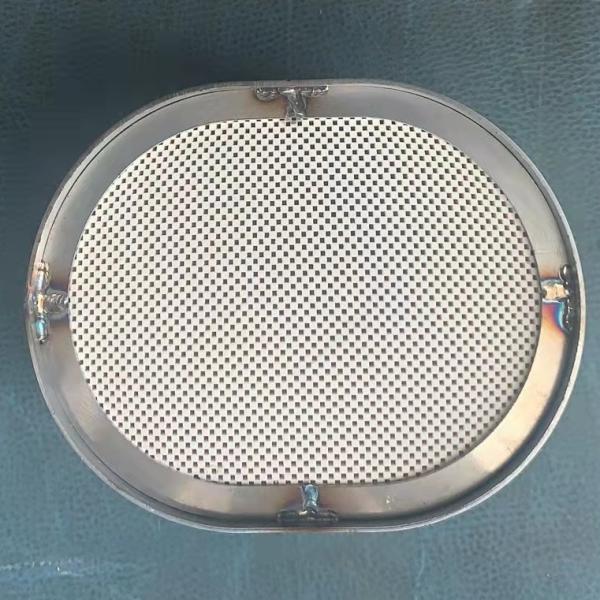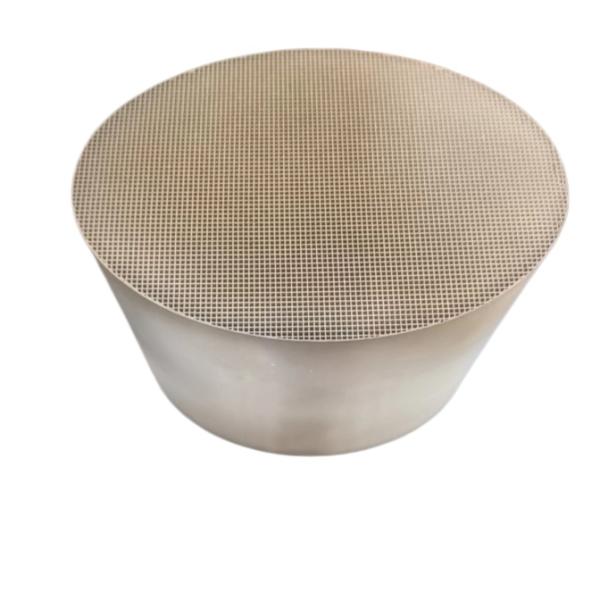



High Strength Dry Pressed Honeycomb Ceramic Filter for Iron & Non-Ferrous Casting
- Size : Customized Size
- Material:Corundum and Mullite
- Application:Suitable for filtering ductile iron / gray iron / stainless steel
- Hole Number: 100~400Cpsi
- Specification
- FAQs
High Strength Dry Pressed Honeycomb Ceramic Filter for Iron & Non-Ferrous Casting
Description :
The dry Pressed Honeycomb ceramic filter is made by material of mullite or cordierite ceramics. It is able to get rid of the metal impurity, refractory scrap, solid refractory alloy, sinter and molten metal liquid when casting products, reduce the air vent of castings, raise the casting quality, and reduce the cost.
Product Features:
*Purifying the metal liquid, absorbing the oxide and filtering the non-metal impurities
*Making the metal liquid flowing at stable speed, reducing the vortex and reducing the bubbles in the cast part
*Equalizing the phase structure and prolonging the tools lifetime
*Improving the cast part surface performance and improving the density of the cast part
Product Parameters:
|
Material |
Cordierite and mullite, Cordierite/mullite, Mullite/zirconia, High aluminum, Silicon carbide, etc. |
|
Operating Temperature |
≤1500℃ |
|
Color |
white |
|
Hole Number |
100/200/300 |
|
Hole Rate |
38-60% |
|
Compressive Strength |
≥15Mpa |
|
Impact Thermal Resistance |
>5 |
|
Bulk Density |
0.8-1.2g/cm³ |
|
Normal Size: 37×37mm,43.5×43.5mm,49×49mm,55×55mm,66×66mm,81×81mm Thickness: 9.5mm,12.5mm,15mm |
|
Application :
1.As a catalyst carrier, ceramic honeycomb materials are usually used to purify automobile emissions and eliminate odors.
2.As a heat exchange medium, ceramic honeycomb material is mainly used in the heat recovery unit of RTO, not ceramic saddle
3.Ceramic honeycomb material is used as the filtrate matrix, usually used in food processing, water treatment, environmental industry, metallurgical industry, etc.
Size and Specifications:
Due to their basic filtering capacity and high heat capacity,these Ceramic Honeycomb Strainer are used rather in smaller dimensions and thickness for grey cast iron castings. The Ceramic Honeycomb Strainer capture particular slags and make mould filling more homogeneous and uniform, thus increasing purity of the cast metal and eliminating sand mixture erosion during casting.
|
Class |
Dimension (mm) |
Hole Size (mm) |
Wall Thickness (mm) |
Heat Transfer Area (m2/m3) |
Porosity (%) |
|
Ceramic Honeycomb Filter with Square Holes |
40*40*12 |
1.3 |
0.45 |
1580 |
51.3 |
|
40*40*12 |
1.92 |
0.6 |
1190 |
57 |
|
|
50*50*12 |
1.3 |
0.45 |
1580 |
51.3 |
|
|
50*50*12 |
1.92 |
0.6 |
1190 |
57 |
|
|
55*55*12 |
1.3 |
0.45 |
1580 |
51.3 |
|
|
55*55*12 |
1.92 |
0.6 |
1190 |
57 |
|
|
66*66*12 |
1.3 |
0.45 |
1580 |
51.3 |
|
|
66*66*12 |
1.92 |
0.6 |
1190 |
57 |
|
|
Ceramic Honeycomb Filter with Round Holes |
40*40*10 |
2.3 |
1.0 |
758 |
43.6 |
|
40*40*12.5 |
2.3 |
1.0 |
758 |
43.6 |
|
|
50*50*12.5 |
2.3 |
10. |
758 |
43.6 |
|
|
55*55*10 |
2.0 |
1.0 |
1190 |
40 |
|
|
66*66*12.5 |
2.3 |
1.0 |
758 |
43.6 |
|
|
75*75*15 |
2.3 |
1.0 |
758 |
43.6 |
|
|
81*81*12 |
2.3 |
1.0 |
758 |
43.6 |
|
|
81*81*15 |
2.3 |
1.0 |
758 |
43.6 |
|
|
100*100*20 |
3.5 |
1.0 |
590 |
51 |
|
|
132*132*20 |
5.0 |
1.2 |
438 |
57 |
|
|
Ceramic Honeycomb Filter with Triangle Holes |
40*40*12 |
2 |
0.45 |
1395 |
40 |
|
50*50*12 |
2 |
0.45 |
1186 |
40 |
|
|
66*66*12 |
3 |
0.7 |
1186 |
52 |
|
|
75*75*12 |
3 |
0.7 |
1186 |
52 |
|
|
82*82*13 |
3 |
0.7 |
1186 |
52 |
|
|
100*100*15 |
3 |
0.7 |
1186 |
52 |
FAQ: High Strength Dry Pressed Honeycomb Ceramic Filter for Iron & Non-Ferrous Casting
Q1. What is a dry pressed honeycomb ceramic filter?
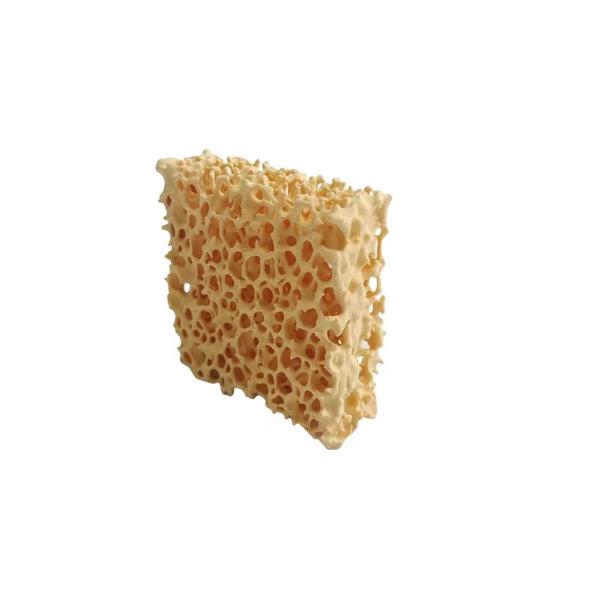
It's a rigid ceramic component with multiple straight-through channels, used in foundries to purify molten metal. It removes inclusions and slag, converts turbulent flow to laminar flow, and improves casting quality. Unlike foam filters (sponge-like), honeycomb filters have parallel channels for lower flow resistance and higher strength.
Q2. What materials are available?
| Material | Best For |
|---|---|
| Mullite | Iron castings, good adsorption of impurities |
| Cordierite | Iron & non-ferrous, excellent thermal shock resistance |
| Alumina | Non-ferrous alloys, chemical stability |
Q3. What are the key specs?
| Parameter | Typical Value |
|---|---|
| Channel density | 50–300 CPSI |
| Compressive strength | ≥20 MPa |
| Max temperature | Up to 1520°C |
| Common sizes | 37×37mm to 150×150mm |
| Thickness | 8–25mm |
Q4. How do I choose size and channel density?
Size = based on metal weight being filtered.
| Filter Size | Grey Iron Capacity | Ductile Iron Capacity |
|---|---|---|
| 40×40mm | 30–40 kg | 45–70 kg |
| 100×100mm | 300–388 kg | 158–205 kg |
| 150×150mm | 800–1000 kg | 480–600 kg |
Channel Density: Lower CPSI (50–100) = higher flow for large castings. Higher CPSI (200–300) = finer filtration for quality-critical parts.
Q5. How to install and use?
- Position: Place in gating system with flow area 2–4× choke area
- Seal: Prevent bypass flow with proper support (5–15mm edge)
- Preheat: Gradually to near melt temperature to avoid thermal shock
- Store: In dry conditions (<60% RH), off the ground
Q6. What benefits can I expect?
- Scrap rate reduced up to 85%
- Casting strength increased 10–20%
- Better machinability and surface quality
Q7. Honeycomb vs. Foam – what's the difference?
| Feature | Honeycomb | Foam |
|---|---|---|
| Structure | Straight channels | 3D sponge network |
| Strength | Higher | Lower |
| Flow resistance | Lower | Higher |
| Flow rectification | Excellent | Good |
| Best for | High-volume iron/non-ferrous | High-purity requirements |