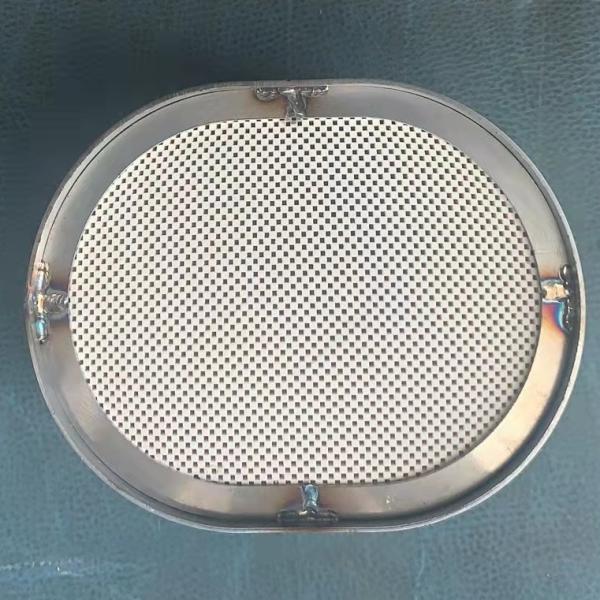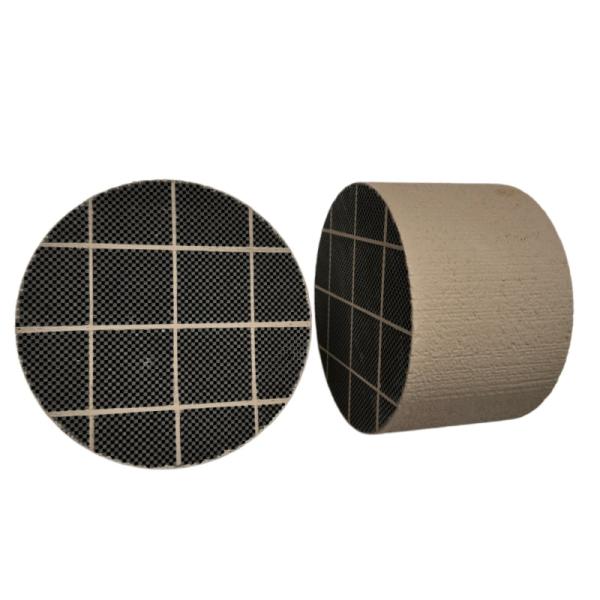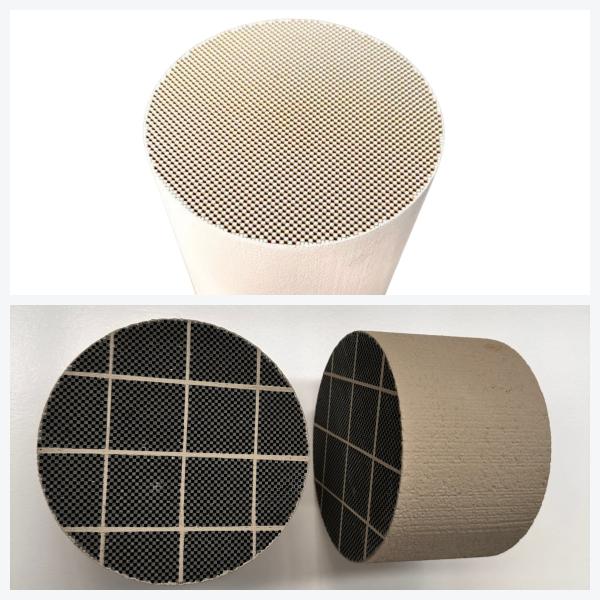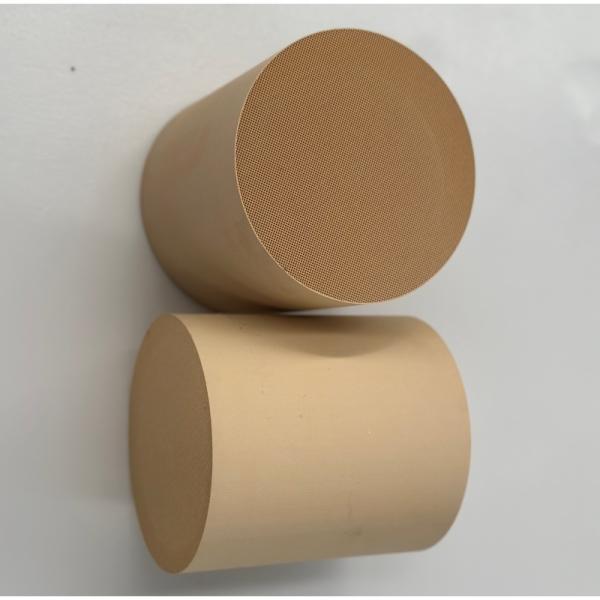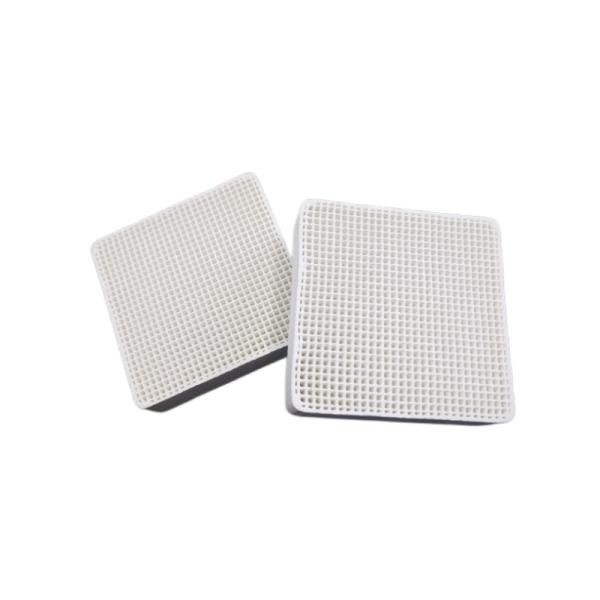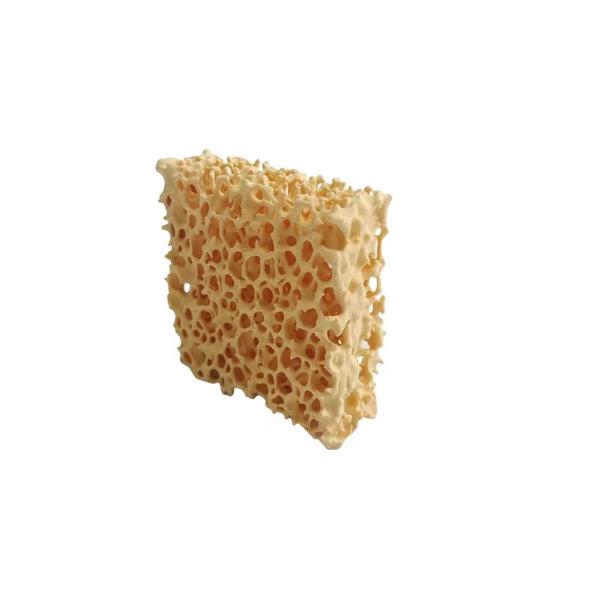



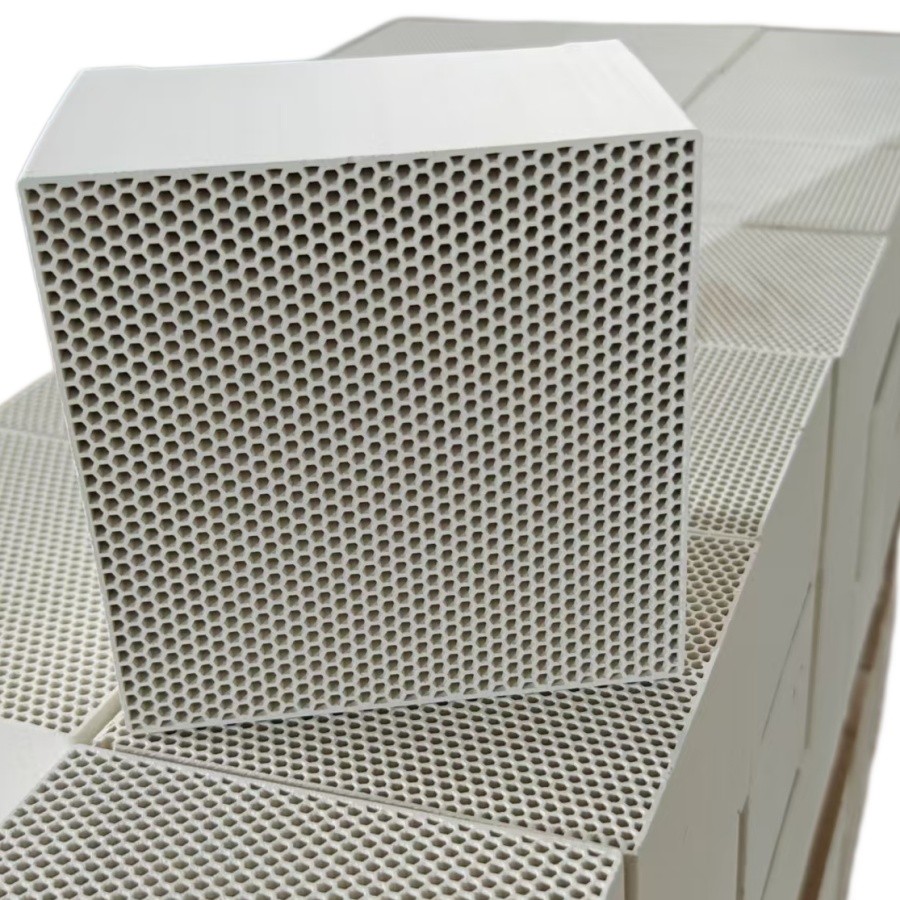
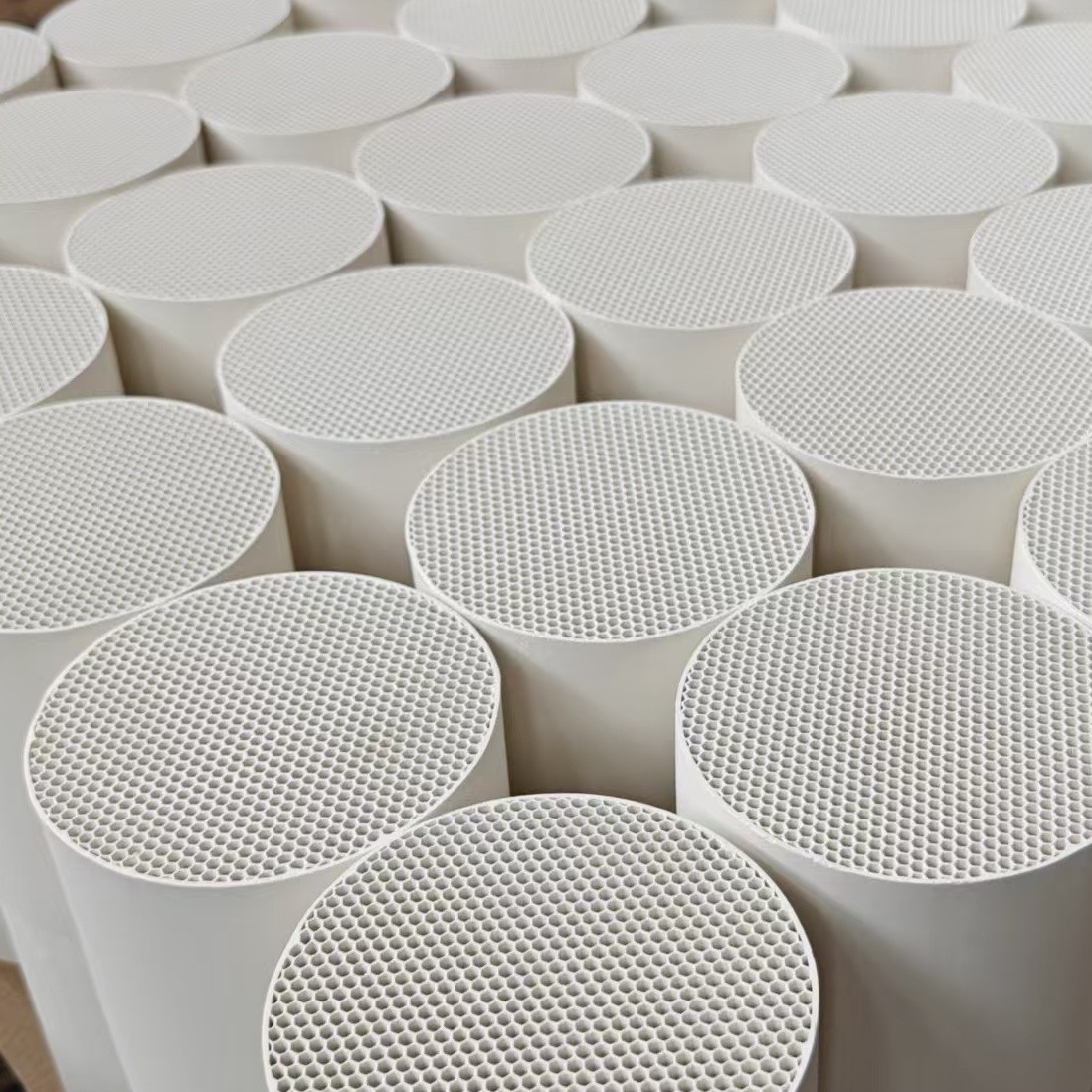
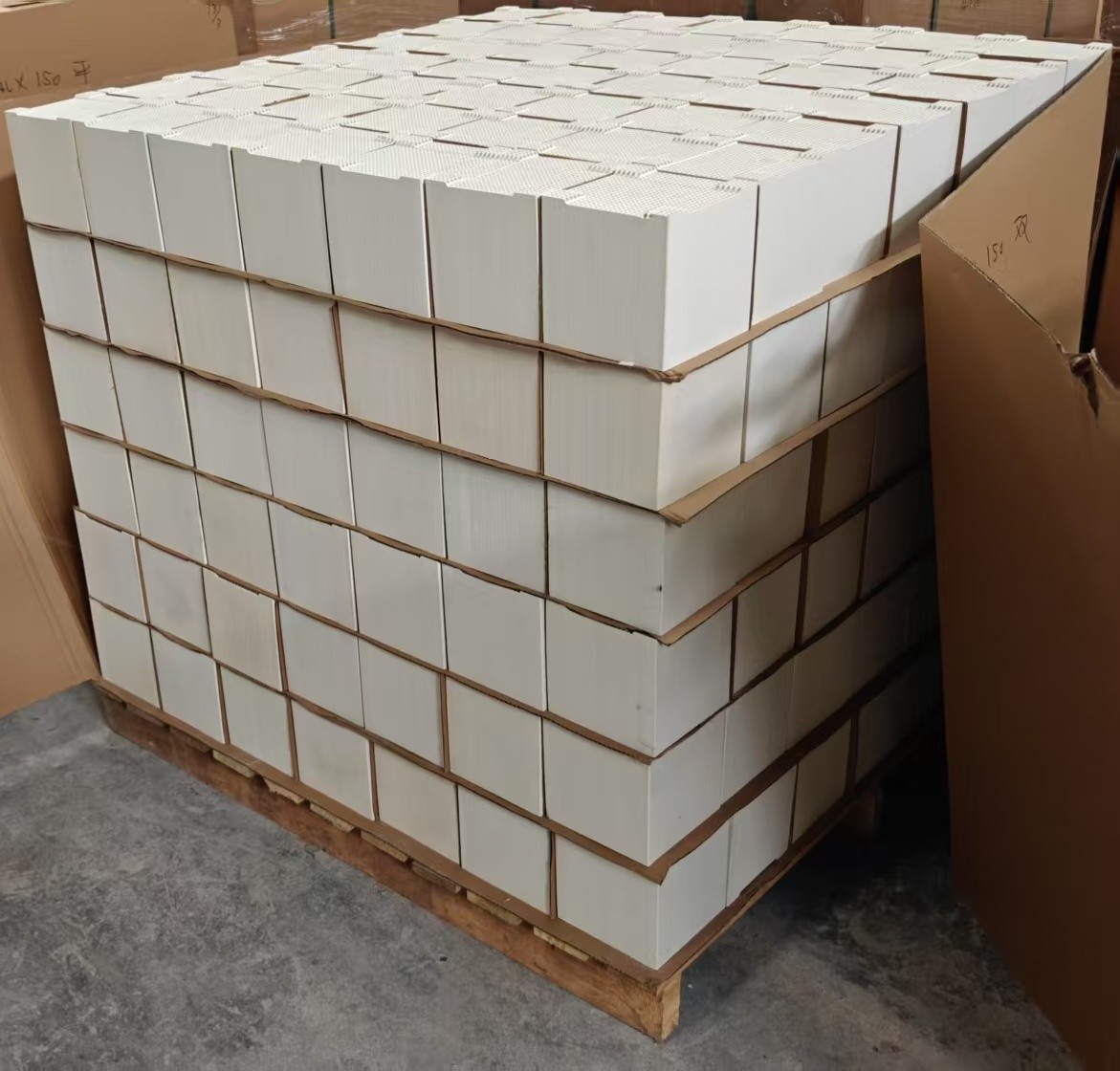
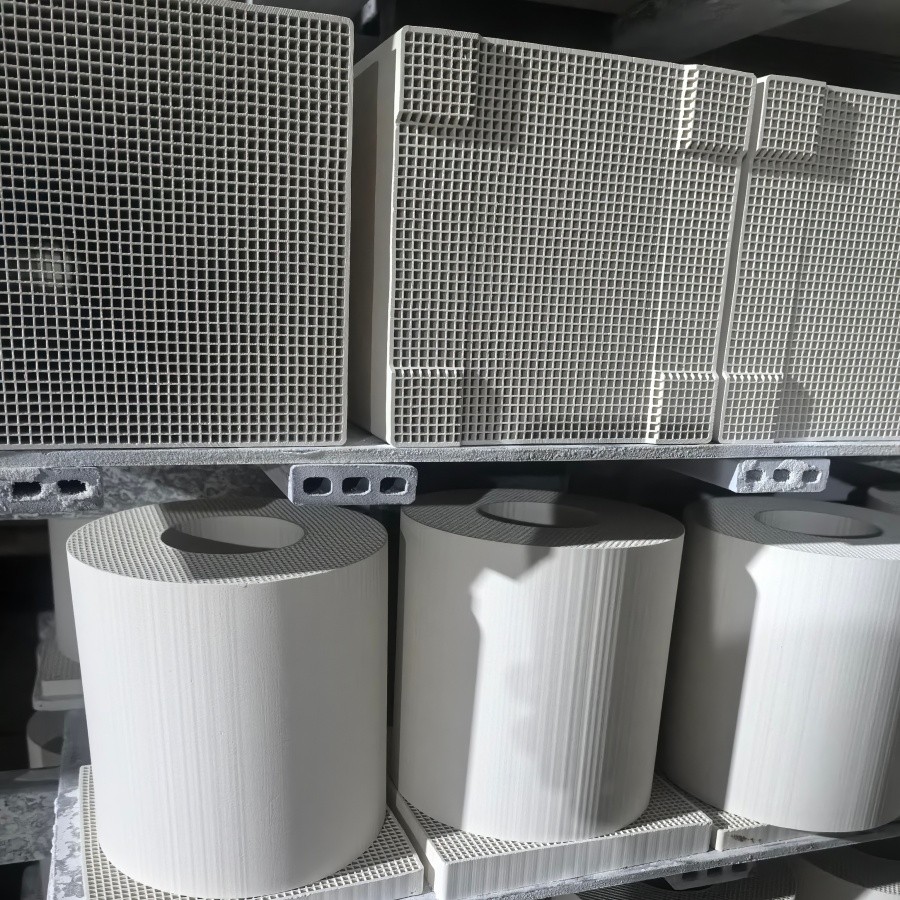
Honeycomb Ceramic Regerator
- Size : 150x150x100mm
- Material:Cordierite,Mullite,Alumina / Corundum
- Application Fields:Metallurgy Industry
- •Heat Storage Density: Approximately 1200 kJ/m³·℃
- Specification
- FAQs
HONEYCOMB CERAMIC REGENERATOR
Product Introduction
1. Product Overview
The honeycomb ceramic regenerator is a high-efficiency heat storage and heat exchange ceramic material. It is manufactured from high-purity refractory raw materials including cordierite, mullite, alumina and silicon carbide. Featuring dense parallel honeycomb pore structures, this product possesses a large specific surface area, low thermal expansion coefficient and excellent thermal shock resistance. It is the core filler for regenerative combustion systems and industrial waste heat recovery equipment, widely applied in high-temperature industrial furnaces.
2. Main Specifications
|
NO. |
Size (mm) |
Cells |
Hole Dia. (mm, est.) |
Wall Thick. (mm) |
Surf. Area (m²/m³) |
Open Area (%) |
Notes |
|
1 |
100x100x100 |
5x5 |
~16.0 |
1.5-2.0 |
~200-250 |
~75-80 |
Large hole |
|
2 |
100x100x100 |
13x13 |
~6.0 |
1.2-1.5 |
~400-450 |
~65-70 |
Common |
|
3 |
100x100x100 |
14x14 |
~5.5 |
1.0-1.2 |
~450-500 |
~65-70 |
Common |
|
4 |
100x100x100 |
25x25 |
~2.5 |
1.0 |
~780 |
~49 |
Standard |
|
5 |
100x100x100 |
32x32 |
~1.8 |
0.8-1.0 |
~900-1000 |
~55-60 |
High SA |
|
6 |
100x100x100 |
40x40 |
~1.4 |
0.7-0.8 |
~1100-1200 |
~50-55 |
High SA |
|
7 |
100x100x100 |
43x43 |
~1.3 |
0.6-0.7 |
~1200-1300 |
~50-55 |
High SA |
|
8 |
100x100x100 |
50x50 |
~1.1 |
0.6-0.7 |
~1300-1400 |
~45-50 |
High SA |
|
9 |
100x100x100 |
60x60 |
~0.9 |
0.5-0.6 |
~1400-1550 |
~40-45 |
High SA |
|
10 |
150x150x100 |
25x25 |
~2.5 |
1.0 |
~780 |
~49 |
Same as 100x100x100 |
|
11 |
150x150x100 |
40x40 |
~1.4 |
0.7-0.8 |
~1100-1200 |
~50-55 |
Same as 100x100x100 |
|
12 |
150x150x100 |
43x43 |
~1.3 |
0.6-0.7 |
~1200-1300 |
~50-55 |
Same as 100x100x100 |
|
13 |
150x150x100 |
50x50 |
~1.1 |
0.6-0.7 |
~1300-1400 |
~45-50 |
Same as 100x100x100 |
|
14 |
150x150x100 |
60x60 |
~0.9 |
0.5-0.6 |
~1400-1550 |
~40-45 |
Same as 100x100x100 |
|
15 |
150x150x150 |
25x25 |
~2.5 |
1.0 |
~780 |
~49 |
Standard |
|
16 |
150x150x150 |
40x40 |
~1.4 |
0.7-0.8 |
~1100-1200 |
~50-55 |
High SA |
|
17 |
150x150x150 |
43x43 |
~1.3 |
0.6-0.7 |
~1200-1300 |
~50-55 |
High SA |
|
18 |
150x150x150 |
50x50 |
~1.1 |
0.6-0.7 |
~1300-1400 |
~45-50 |
High SA |
|
19 |
150x150x150 |
60x60 |
~0.9 |
0.5-0.6 |
~1400-1550 |
~40-45 |
High SA |
|
20 |
150x150x300 |
25x25 |
~5.0 |
1.0 |
~570 |
~68 |
Long type |
|
21 |
150x150x300 |
40x40 |
~3.0 |
0.7 |
~880 |
~65 |
Long type |
|
22 |
150x150x300 |
43x43 |
~2.8 |
0.6 |
~980 |
~67 |
Long type |
|
23 |
150x150x300 |
50x50 |
~2.27 |
0.6-0.7 |
~1000-1050 |
~58-64 |
Long type |
|
24 |
150x150x300 |
60x60 |
~2.0 |
0.5 |
~1280-1310 |
~64-65 |
Long type |
3. Material Classification & Working Temperature
|
Material |
Max Working Temperature |
Characteristic |
|
Cordierite |
≤ 1200℃ |
Honeycomb Ceramic Regenerator FAQ
Q1: What materials are used for Honeycomb Ceramic Regenerators?
The most commonly adopted materials include cordierite, mullite, corundum-mullite, dense cordierite and lithium ceramics. Each material is selected to suit specific operating temperature requirements and chemical corrosion resistance.
Q2. How does a Honeycomb Ceramic Regenerator work?
Regenerators are typically installed in pairs or banks within gas passages. During the heat storage phase, hot flue gas flows through the honeycomb ceramic medium, which absorbs and retains thermal energy. In the heat release phase (with switching cycles generally ranging from 30 to 120 seconds), cold or ambient gas passes through the same medium, picking up the stored heat to reach high temperatures. This enables efficient energy recovery.
Q3. What are the common cell geometries of Honeycomb Ceramic Regenerators?
Major cell shapes include square, hexagonal, circular and triangular. Square and triangular cells are the most widely used. Triangular cell structures generally deliver superior load-bearing capacity and higher cell density.
Q4: What cell densities do you offer for the Honeycomb Ceramic Regenerator, and which one should I choose?
We offer a wide range of cell structures for the Honeycomb Ceramic Regenerator, typically spanning from 11 CPSI to over 60 CPSI (cells per square inch), corresponding to configurations from 13×13 holes up to 60×60 holes for a standard 150×150×300mm block. To choose the optimal cell density, you need to balance heat transfer efficiency against gas resistance (pressure drop) and the cleanliness of your exhaust gas.
Q5: What is the maximum operating temperature?
Our standard honeycomb ceramic regenerators can withstand continuous operation at up to 1180°C, with specialized formulations available for up to 1300°C upon request. Please confirm your actual furnace temperature so we can recommend the appropriate grade.
Q6: How long is the service life? How can I extend it?
Under normal operating conditions (proper temperature control, clean fuel, and regular maintenance), the typical service life is 3–5 years. To extend lifespan:
- Avoid rapid temperature fluctuations (thermal shock is the main failure cause).
- Use pre-filtering systems to reduce dust and particulate deposition.
- Perform periodic back-flushing or compressed air cleaning to keep channels open.
Q7: What quality inspections do you perform on each batch?
Every batch undergoes strict incoming and outgoing quality control, including:
- Dimensional accuracy (±1.0 mm tolerance)
- Appearance (no cracks, chips, or blocked channels)
- Bulk density, water absorption, and crushing strength
- Thermal expansion coefficient and heat capacity (per GB/T standards)
Full Mill Test Certificates (MTC) and inspection reports are provided with each shipment. We also welcome third-party inspections if required.
Q8: Do you provide customized sizes and specifications?
Yes. We offer full customization including:
- Dimensions (length, width, height)
- Cell density and wall thickness
- Material composition (cordierite, mullite, or alumina-based)
- Special coating or treatment (e.g., anti-clogging, acid-resistant)
Please send your technical drawings or requirements, and our engineering team will respond with a tailored solution within 48 hours.
Q9: What is your lead time and MOQ?
For standard models (e.g., 150×150×300 mm, 35 cpsi), our typical lead time is 15–25 days after order confirmation. The MOQ (Minimum Order Quantity) is usually 1 cubic meter (≈ 200–300 pcs depending on size), but sample orders are welcome for testing purposes. Larger orders may receive priority production scheduling.
Q11: How should the regenerators be packed and shipped?
We pack each piece individually with protective foam or cardboard separators, then place them in strong wooden crates or steel-framed pallets to prevent breakage during transit. All packaging is export-standard and suitable for sea, air, or land freight. Custom packaging requirements can be accommodated.
Q12: Do you provide technical support and after-sales service?
Absolutely. Our support includes:
- Pre-sales: Material selection, size optimization, and system integration advice.
- After-sales: Installation guidance, troubleshooting, and performance monitoring assistance.
We also offer replacement parts and can arrange on-site technical visits if needed (subject to agreement).