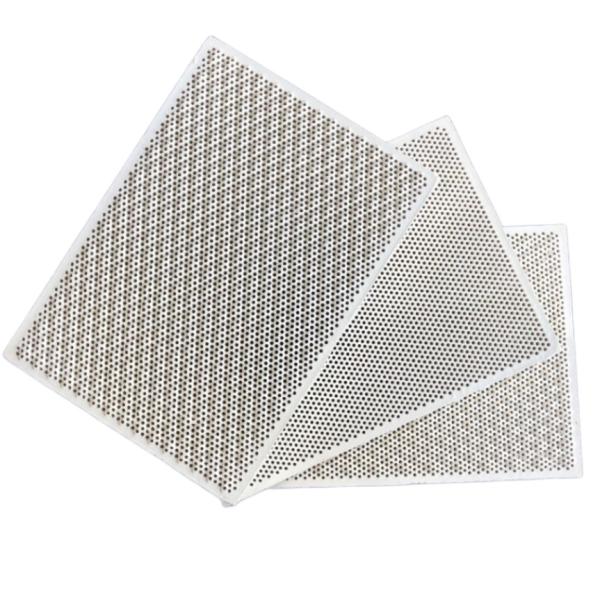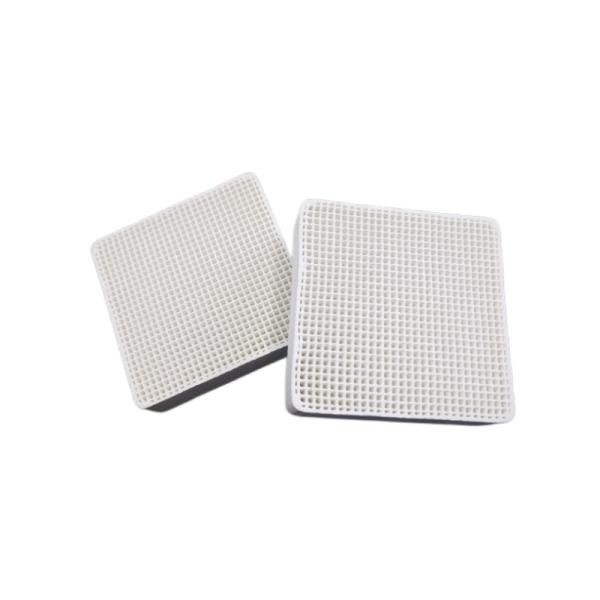



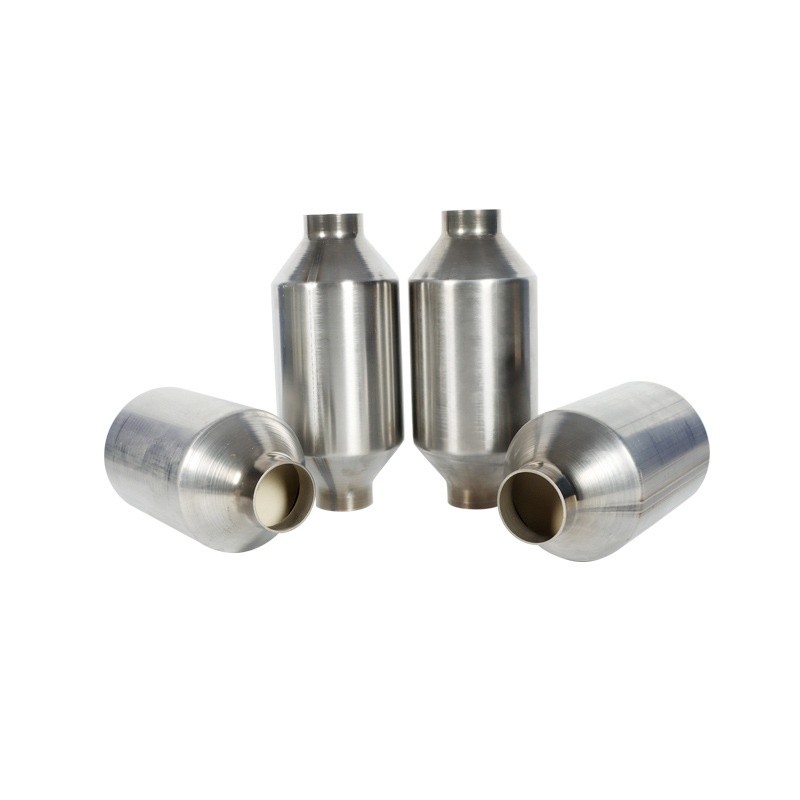
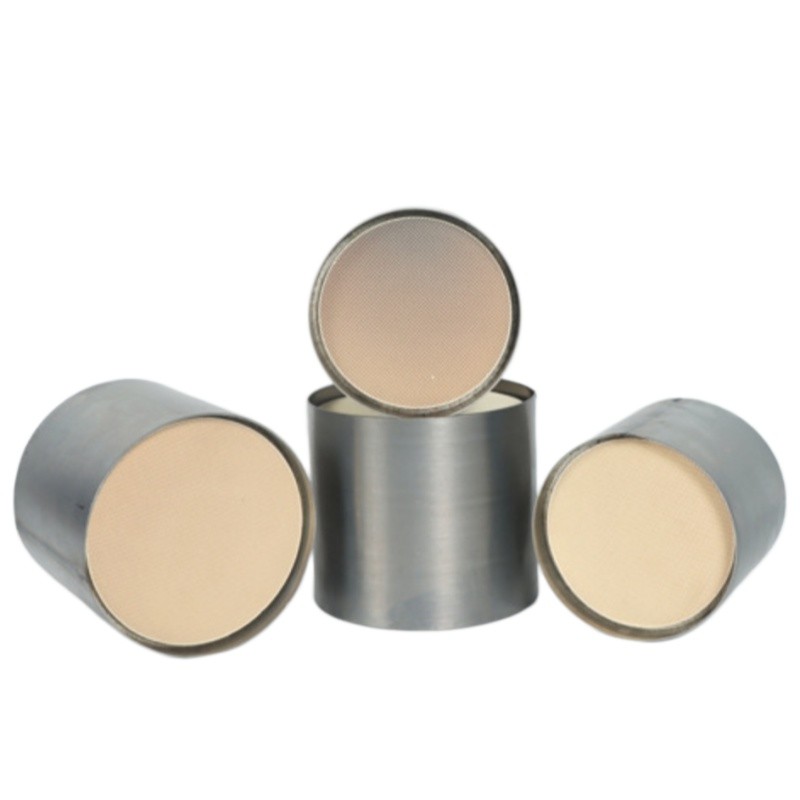
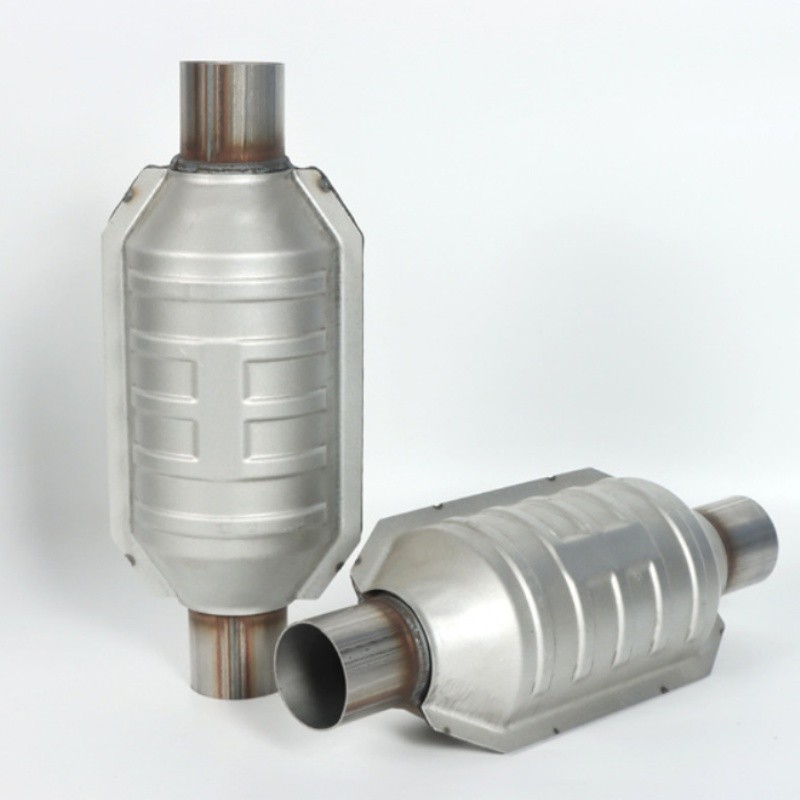
Pt Pd Rh Three-Way Catalytic Converter For Car Exhaust
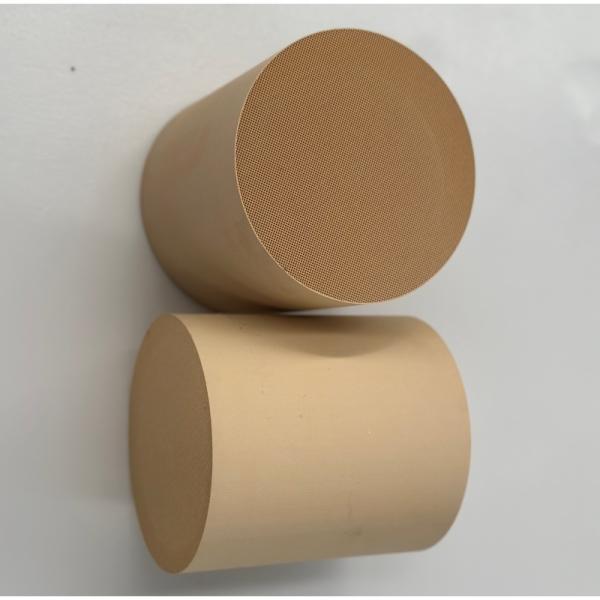
- Material:Cordierite and stainless steel
- Size:Diameter: 80-144mm Length: 70-152mm (Customizable)
- Shape :Round, Oval,Racetrack-shaped
- Application :Auto Exhaust System
- Specification
- FAQs
Pt Pd Rh Three-Way Catalytic Converter For Car Exhaust
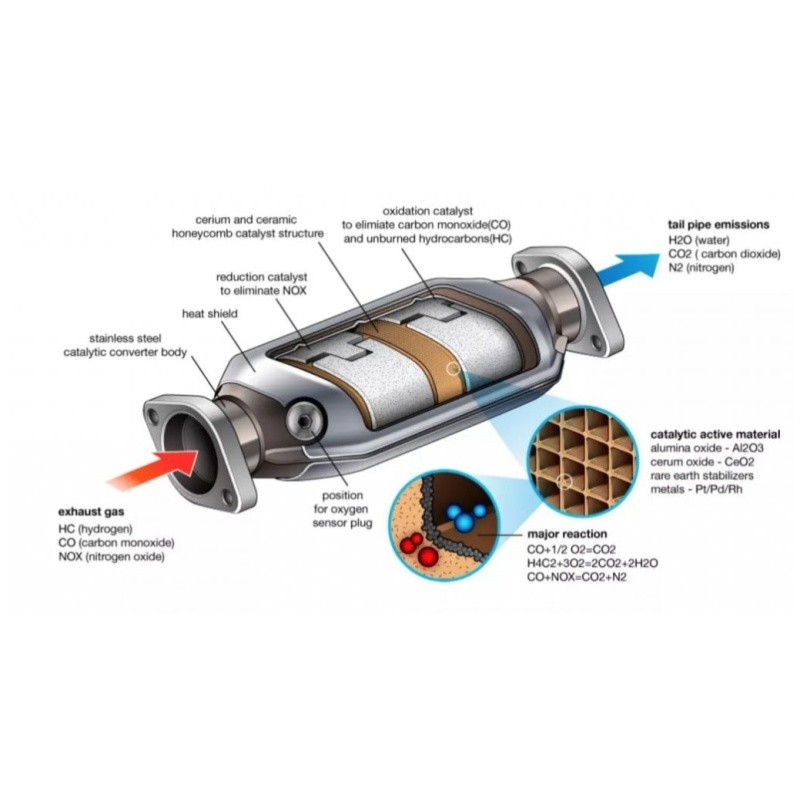
The three-way catalytic converter is the most important external purification device installed in the automobile exhaust system. The three-way catalytic reactor is similar to a muffler. Its outer surface is made of double-layer stainless steel sheet in a cylindrical shape. A heat-insulating material-asbestos fiber felt is installed in the double-layer sheet sandwich. Inside, there is a purifying agent in the middle of the mesh partition. The purifying agent is composed of a substrate and a catalyst. The main function of the 3 way catalytic converter is to convert harmful gas into harmless gas, which plays a role in protecting the environment. It is installed in the exhaust pipe of a car, close to one end of the engine. After the exhaust gas is discharged, it is converted through three-way catalysis. After the exhaust gas is converted, it is discharged outside the car.
Product Feature:
1. Good low tempreture light off performance (T50 ≤ 180 ℃ ).
2. Higher conversion rate (CO,THC,SOF ≥ 97%).
3. Precious metals & rare earth compound catalyst technology provides the high oxygen storage and high stability catalyst.
4. Precise control of precious metals and other materials during catalyst manufacturing process.
5. Vehicle complete system matching technology and systematic solutions for the customer.
6. Up to Euro VI Emission Standard.
Technical Advantages:
1. Good low tempreture light off performance (T50 ≤ 180 ℃ ).
2. Higher conversion rate (CO,THC,SOF ≥ 97%).
3. Precious metals & rare earth compound catalyst technology provides the high oxygen storage and high stability catalyst.
4. Precise control of precious metals and other materials during catalyst manufacturing process.
5. Vehicle complete system matching technology and systematic solutions for the customer.
6. Up to Euro VI Emission Standard.
Product Paramenters
|
Product name |
Three-way Ceramic Catalyst converter |
|
Material |
Cordierite and stainless steel |
|
Size |
Diameter: 80-144mm Length: 70-152mm (Customizable) |
|
Working Temperature |
150°C-1200°C |
|
Shape |
Round, Oval,Racetrack-shaped |
|
Cell Density |
400-600 CPSI (customizable) |
|
Application |
Auto Exhaust System |
|
Emission Standard: |
Euro 3/4/5/6 |
|
Model: |
Universal |
Specification Size
|
Specification |
Diameter (mm) |
Length (mm) |
Cell Density (CPSI) |
Emission Standard |
|
Ø80*60 |
80 |
60 |
200/300/400/600 |
Euro 3/4/5/6 |
|
Ø93*60 |
93 |
60 |
200/300/400/600 |
Euro 3/4/5/6 |
|
Ø93*75 |
93 |
75 |
200/300/400/600 |
Euro 3/4/5/6 |
|
Ø93*88.3 |
93 |
88.3 |
200/300/400/600 |
Euro 3/4/5/6 |
|
Ø93×101.6 |
93 |
101.6 |
200/300/400/600 |
Euro 3/4/5/6 |
|
Ø101.6*60 |
101.6 |
60 |
200/300/400/600 |
Euro 3/4/5/6 |
|
Ø101.6*76.2 |
101.6 |
76.2 |
200/300/400/600 |
Euro 3/4/5/6 |
|
Ø101.6*90 |
101.6 |
90 |
200/300/400/600 |
Euro 3/4/5/6 |
|
Ø101.6*100 |
101.6 |
100 |
200/300/400/600 |
Euro 3/4/5/6 |
|
Ø101.6*118 |
101.6 |
118 |
200/300/400/600 |
Euro 3/4/5/6 |
|
Ø101.6*123.3 |
101.6 |
123.3 |
200/300/400/600 |
Euro 3/4/5/6 |
|
Ø101.6*136 |
101.6 |
136 |
200/300/400/600 |
Euro 3/4/5/6 |
|
Ø101.6*152.4 |
101.6 |
152.4 |
200/300/400/600 |
Euro 3/4/5/6 |
|
Ø103*130 |
103 |
130 |
200/300/400/600 |
Euro 3/4/5/6 |
|
Ø105.7*100 |
105.7 |
100 |
200/300/400/600 |
Euro 3/4/5/6 |
|
Ø105.7*115 |
105.7 |
115 |
200/300/400/600 |
Euro 3/4/5/6 |
|
Ø105.7*130 |
105.7 |
130 |
200/300/400/600 |
Euro 3/4/5/6 |
|
Ø105.7*147.5 |
105.7 |
147.5 |
200/300/400/600 |
Euro 3/4/5/6 |
|
Ø105.7*152.4 |
105.7 |
152.4 |
200/300/400/600 |
Euro 3/4/5/6 |
|
Ø118.4*90 |
118.4 |
90 |
200/300/400/600 |
Euro 3/4/5/6 |
|
Ø118.4*100 |
118.4 |
100 |
200/300/400/600 |
Euro 3/4/5/6 |
|
Ø118.4*101.6 |
118.4 |
101.6 |
200/300/400/600 |
Euro 3/4/5/6 |
|
Ø118.4*114.3 |
118.4 |
114.3 |
200/300/400/600 |
Euro 3/4/5/6 |
|
Ø118.4*120 |
118.4 |
120 |
200/300/400/600 |
Euro 3/4/5/6 |
|
Ø118.4*123.3 |
118.4 |
123.3 |
200/300/400/600 |
Euro 3/4/5/6 |
|
Ø118.4*127 |
118.4 |
127 |
200/300/400/600 |
Euro 3/4/5/6 |
|
Ø118.4*136 |
118.4 |
136 |
200/300/400/600 |
Euro 3/4/5/6 |
|
Ø118.4*138 |
118.4 |
138 |
200/300/400/600 |
Euro 3/4/5/6 |
|
Ø118.4*152.4 |
118.4 |
152.4 |
200/300/400/600 |
Euro 3/4/5/6 |
|
Ø132.1*127 |
132.1 |
127 |
200/300/400/600 |
Euro 3/4/5/6 |
|
Ø132.1*146 |
132.1 |
146 |
200/300/400/600 |
Euro 3/4/5/6 |
|
Ø143.8*101.6 |
143.8 |
101.6 |
200/300/400/600 |
Euro 3/4/5/6 |
|
Ø143.8*152.4 |
143.8 |
152.4 |
200/300/400/600 |
Euro 3/4/5/6 |
|
Remark: |
Other sizes can be customized according to customer requirements. |
|||
Working Principle
TWC Three Way Catalyst
A three-way catalyst can cut CO, HC and NOx by over 99% if the air to fuel ratio is accurately controlled. Three-way catalysts will only give full conversion of each of these three pollutants in a gas stream containing a stoichiometric ratio of CO and NOx.
FAQ-Pt/Pd/Rh Three-Way Catalytic Converter for Car Exhaust
A three-way catalytic converter (TWC) is an emissions control device in gasoline vehicle exhaust systems. It uses precious metal catalysts to simultaneously convert three harmful pollutants—CO, HC, and NOx—into harmless substances. Conversion efficiency can reach over 90% under optimal conditions.
| Metal | Primary Function |
|---|---|
| Platinum (Pt) | Oxidizes CO and HC; excellent for low-temperature ignition and high-temperature stability |
| Palladium (Pd) | Oxidizes CO and HC; strong oxidation activity |
| Rhodium (Rh) | Essential for reducing NOx; prevents harmful byproducts |
While Pt and Pd handle oxidation, Rh is the key metal for NOx conversion. Without Rh, NOx reduction efficiency drops significantly.
Two critical conditions must be met for maximum efficiency:
- Precise air-fuel ratio: Engine must operate near the stoichiometric point (~14.7:1). Oxygen sensors monitor exhaust and the ECU adjusts fuel injection in a closed-loop system
- Operating temperature: Requires "light-off" temperature of approximately 250–400°C to become active. Cold-start emissions remain a major challenge
A TWC consists of three main components:
- Metal housing: Stainless steel with heat insulation
- Ceramic substrate: Honeycomb structure (typically 400–600 CPSI) providing large surface area with low flow resistance
- Catalytic coating: Pt/Pd/Rh precious metals on a washcoat layer (alumina, ceria-zirconia) with oxygen storage capability
Ceramic honeycomb substrates are used in over 90% of vehicles, with cordierite being the most common material.
| Failure Type | Cause |
|---|---|
| Thermal aging | High-temperature exposure (>900°C) from engine misfire or rich mixture |
| Chemical poisoning | Lead, sulfur, or phosphorus in fuel/oil – causes permanent deactivation |
| Physical clogging | Substrate melting, fragmentation, or carbon deposits |
| Oxygen sensor failure | Faulty sensors disrupt closed-loop control |
Warning sign: Check Engine Light with P0420/P0430 code ("Catalyst efficiency below threshold").
- Synergy: Each metal complements the others across the full engine operating range
- Enhanced stability: Pt improves high-temperature durability; maintains N₂ selectivity after aging
- Broader temperature window: Pt/Rh handles low-temperature activity; Pd/Rh covers mid-to-high temperature oxidation
- Balanced performance: Achieves over 95% conversion of all pollutants under optimized conditions
- Use unleaded fuel only – Lead causes permanent poisoning
- Avoid engine misfires – Unburned fuel can overheat and destroy the catalyst
- Keep engine properly tuned – Misfiring or backfiring damages the converter
- Use quality fuel – Sulfur and impurities accelerate poisoning
- Check O₂ sensors regularly – Ensure closed-loop fuel control is functioning
- GPF integration: Combining TWC with gasoline particulate filters for particle control
- Low-precious-metal technology: Reducing Pt/Rh content through improved dispersion and substrate design
- Electrically heated catalysts: Rapid heating to address cold-start emissions (key for future China 7 standards)
- Enhanced oxygen storage: Optimized ceria-zirconia composites for better air-fuel ratio buffering